
Oliver is an Assistant Professor in the Department of Electronic, Electrical and Systems Engineering, and is part of The SERENE Group at the University of Birmingham, a multidisciplinary space environment and radio engineering team led by Professor Sean Elvidge. They specialize in upper atmosphere modelling, ionospheric science, and space weather forecasting.

Ever wondered how scientists keep an eye on the wild conditions in space that can affect satellites, communications, and even power systems on Earth? Well, researchers at the University of Birmingham have just made that job a whole lot easier with a brand-new open-source Python tool called PIRAN (Particles In ResonANce).
Space weather is driven by high-energy particles zipping around Earth’s radiation belts. Understanding how these particles interact with electromagnetic waves is incredibly important, but the maths behind it is notoriously complicated. Until now, many of the tools used to perform these calculations were difficult to access and often hidden away within specialist research groups.
Enter PIRAN. Developed by a team from the University of Birmingham alongside collaborators from Los Alamos National Laboratory, the University of Exeter, and Northumbria University, PIRAN is a free, fully open-source Python package designed to make advanced space weather modelling accessible to everyone.
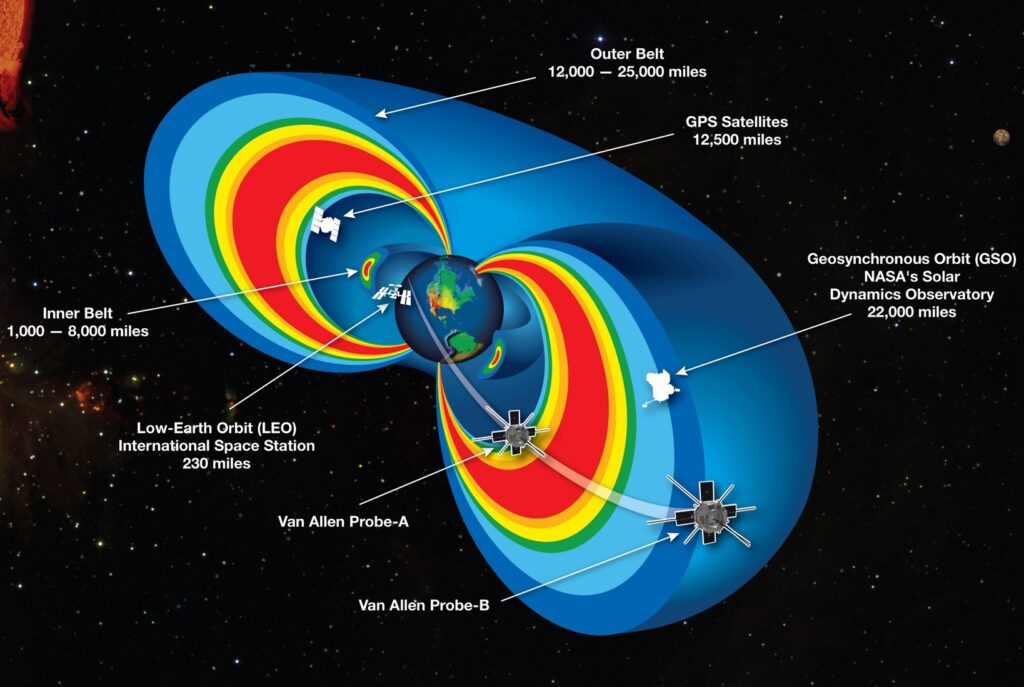
What makes it particularly exciting is that it’s written entirely in Python, meaning researchers can easily read, modify, and expand the code. Whether it’s adding new physics, modelling different particle types, or improving future space weather forecasts, the scientific community now has a powerful new playground to collaborate in.
The software has already demonstrated results that match trusted scientific codes, giving researchers confidence while also removing many of the barriers that previously slowed progress in this field.
So, while the rest of us are using Python to automate spreadsheets or build websites, scientists are now using it to help understand the energetic particles swirling around our planet. Not bad for a programming language named after a comedy troupe!
PIRAN shows how open-source science can bring researchers together and accelerate discoveries, one line of Python at a time.
Members of the software engineering team that helped to produce the code include Thomas Kappas, James Tyrrell, and Adrian Garcia, part of Advanced Research Computing at the University of Birmingham.
We were so pleased to hear how Oliver and the SERENE team were able to make use of what is on offer from Advanced Research Computing. If you have any examples of how it has helped your research, please get in touch with us at bearinfo@contacts.bham.ac.uk.
We are always looking for good examples of the use of High Performance Computing to nominate for HPC Wire Awards – see our recent winner for more details.