
In this case study, we hear from Megha Singh, a researcher in Applied Health Sciences, who uses BEAR to understand the impact of multiple long-term conditions (MLTC) in pregnancy.
Dr Megha Singh is a health data scientist and project manager on the MuM-PreDiCT consortium at the University of Birmingham, where she studies how routinely collected primary care records and women’s own accounts of care can reveal the impact of multiple long-term conditions (MLTC) in pregnancy.
In MuM-PreDiCT, we used the Clinical Practice Research Datalink (CPRD), anonymised UK primary care records covering millions of pregnancies to examine MLTC before, during and after pregnancy. Using CPRD, we mapped how common MLTC is in pregnancy, tracked how the prevalence of individual conditions has changed over two decades, and examined how they relate to adverse pregnancy outcomes for women and their babies. Alongside this quantitative work, our qualitative research drew on in-depth interviews with women living with MLTC, capturing their experiences of preconception and maternity care and the burden of navigating fragmented services. Together, these strands are directly shaping co-produced maternity care bundles.
To work with data of this scale and sensitivity, we relied on BEAR. Our CPRD and qualitative datasets are hosted on the University of Birmingham’s secure BEAR servers, and we used its computing power to build pregnancy cohorts from millions of records, curate hundreds of clinical codes, and run the statistical analyses that underpin our studies. BEAR’s secure, scalable environment has made this research possible safely and reproducibly.
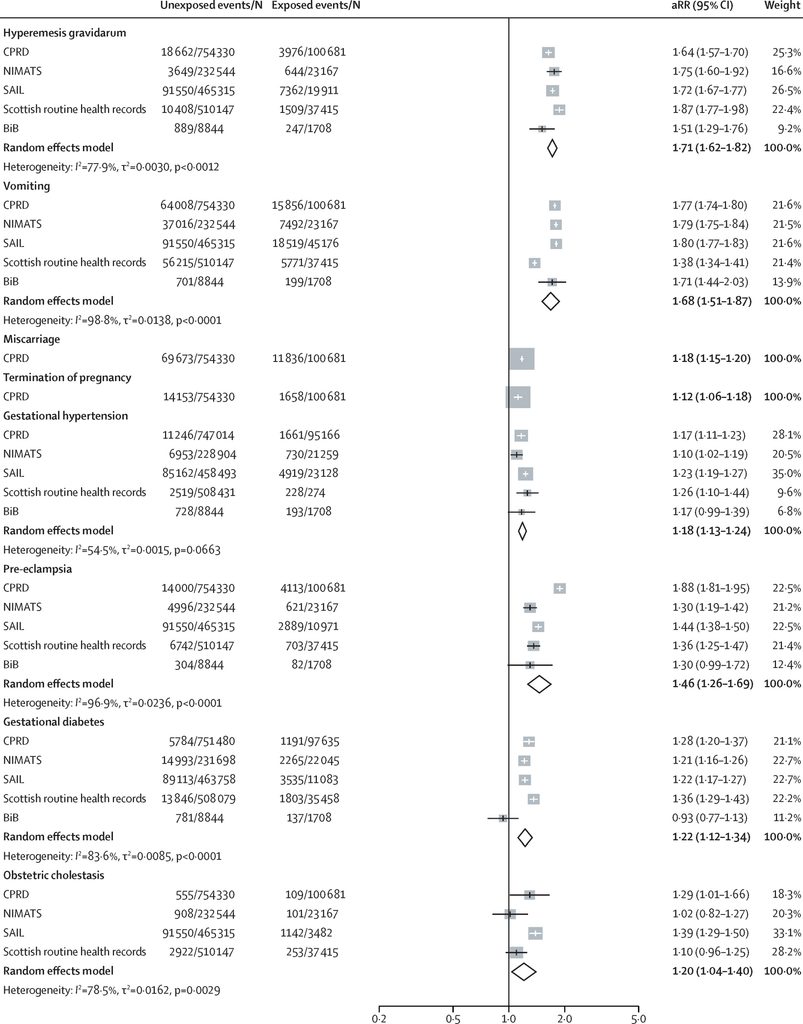
aRR=adjusted risk ratio. BiB=Born in Bradford cohort. CPRD=Clinical Practice Research Datalink. MLTCs=mulitple long-term conditions. NIMATS=Northern Ireland Maternity System. SAIL=Secure Anonymised Information Linkage.
The wider MuM-PreDiCT team at the University of Birmingham has been central to this work, and it is their collective effort that has driven the programme’s many publications and made the project a success. Many more of these publications can be found at https://www.mumpredict.org/publications/.
We were pleased to hear how Megha and MuM-PreDiCT team were able to use what is on offer from Advanced Research Computing. If you have any examples of how it has helped your research, please get in touch with us at bearinfo@contacts.bham.ac.uk.
We are always looking for good examples of the use of High Performance Computing to nominate for HPC Wire Awards – see our recent winner for more details.
Link to paper: Antenatal outcomes for women with multiple long-term conditions in pregnancy: a UK-wide retrospective cohort study https://doi.org/10.1016/S2468-2667(26)00148-9