
Birmingham Environment for Academic Research (BEAR) Newsletter
This month’s Editor: Stephanie Thompson
You may have noticed that there was no February newsletter and there was a good reason for this! We were awaiting the release of the exciting news that the University has won funding from UKRI to provide a National Compute Resource (NCR). There are several new posts to support the new NCR, and we also wanted to include details of those in this newsletter, as they may be of interest to staff or postgraduate researchers on this mailing list.
Included in this month’s newsletter:
- New National Compute Resource to be hosted at the University!
- Four new Grade 8 posts to support the National Compute Resource
- 2026 IT Needs of Active Research Survey
- Reminder: Cooling works in the data centre – upcoming service disruption
- Advanced Research Computing Group annual reports
- Training workshop – OpenMP offload and performance analysis on GPU and CPU
- BEAR Conference registration and call for abstracts
- Sustainable Computing webinar – 19 March
- RSE Midlands 2026: 20 April at the University of Nottingham
- High-resolution soil hydrology analysis enabled by BlueBEAR
- Number of publications supported by BEAR services
- BEAR drop-in session dates
News from the Advanced Research Computing team
New National Compute Resource to be hosted at the University!

We are excited to announce that the University of Birmingham is one of the four winning sites to host a National Compute Resource (NCR) for UK researchers! Building on the success of the current Baskerville Tier-2 system, we will be once again hosting a GPU-based system, called Baskerville NCR. You can find out more via the University news article, and about where the other three UK sites are in the UKRI news article.
Four new Grade 8 posts to support the National Compute Resource

As well as funding the compute infrastructure, UKRI are funding several posts in the Advanced Research Computing team to support use of the new Baskerville NCR. The first of these are four Grade 8 posts as follows:
- Baskerville Operations and Resource Manager
- Senior Engagement and Training Coordinator
- Senior Research Infrastructure Engineer (Cybersecurity)
- Senior Research Software Engineer (Automation and DevOps)
These posts are five-year, fixed-term due to their funding and will all be open for applications until Sunday 12 April. Find out more and how to apply in the recruitment blog post.
2026 IT Needs of Active Research Survey

We need your input in the 2026 ‘IT Needs of Active Research’ survey, sponsored by PVC Professor Rachel O’Reilly and conducted biennially by Advanced Research Computing. Your responses will influence the University’s future compute provision – details of actions from the 2024 survey are listed here. Share feedback on research computing services and identify gaps in the ~15-minute survey for a chance to win a £100 Amazon voucher (5 available). Have your say via the survey link before it closes on Monday March 23.
Reminder: Cooling works in the data centre – upcoming service disruption

Just a reminder about the upcoming essential maintenance on cooling systems that will impact our services over Easter, in particular the HPC-facility, BlueBEAR, which will be unavailable for two weeks – see the blog post on the cooling works for more details.
Advanced Research Computing Group annual reports

TBoth the Research Software Group (RSG) and Researcher Engagement and Data Group (REDG) Annual Reports for 2025 are hot off the press and available via our new Zenodo community! The RSG report describes the wide range of support available from the Research Software Engineers, Research Application Specialists and Research Data Scientists, and features case studies showcasing how the Research Software group has enabled research. The REDG report describes how the group has expanded its reach over the last year, engaging with over 1500 people at University events and inductions, and providing training workshops for over 500 attendees.
Training workshop – OpenMP offload and performance analysis on GPU and CPU

Thanks to funding from Intel, we are running an in-person training workshop on ‘OpenMP offload and performance analysis on GPU and CPU’ on Thursday March 26, from 11:00-12:30. Find out more and book your place via the Eventbrite page.
User group updates
BEAR Conference registration and call for abstracts

Join us for the 15th Annual BEAR Conference on Wednesday 29 April, focused on the theme of AI Integrity and Ethics. The interdisciplinary conference is led by a team of Postgraduate Researchers (PGRs) and explores cutting-edge research enabled by the Birmingham Environment for Academic Research (BEAR). PGRs and Early Career Researchers can register to give a talk or poster (deadline Tuesday 31 March) with the chance to win a prize. Everyone is welcome to attend as a delegate (deadline Monday 13 April) – find out more via the BEAR Conference webpages.
Sustainability updates
ASustainable Computing webinar – 19 March

As part of the University’s activities for Green Week, in addition to running a workshop on Sustainable Research Computing, we will be running a one hour webinar looking at the broader carbon footprint of computing – from everyday digital habits to intensive data processing. Register to attend via the MS Form here.
Use of BEAR services
High-resolution soil hydrology analysis enabled by BlueBEAR

In this month’s featured case study, we hear from PhD student Guilin Luo (Geography), who explains how he uses our supercomputer, BlueBEAR, to investigate how temperate forest soils respond to climatic change. By integrating environmental monitoring data from the Birmingham Institute of Forest Research (BIFoR) site, and using workflows in R and Python, Guilin applies multivariate time-series analysis and machine-learning approaches to understand soil moisture dynamics. Guilin has benefited from both our training and BlueBEAR’s large memory nodes plus parallel-processing capabilities to shorten runtimes dramatically. Have a read of Guilin’s case study to find out more.
Number of publications supported by BEAR services
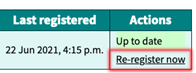
When we ask researchers to check their BEAR projects every six months, we also ask them to provide details of publications that have been enabled by using BEAR services. Since we provided this feature, 1682 publications have been registered on our database. Thank you to all who have helped provide this valuable information, which enables us to show the University that our services provide essential support for research. It is possible to add information on your publications at any time – see details on the Acknowledging BEAR webpage.
Upcoming conferences/webinars
RSE Midlands 2026: 20 April at the University of Nottingham

RSE Midlands 2026 will take place on Monday 20 April at the University of Nottingham. If you have experience with Research Software Engineers, working with research software or are just interested, you can find out more and register for a free ticket to attend here.
Opportunities for 1:1 support
BEAR drop-in session dates

We are currently holding monthly in-person drop-in sessions on the first Wednesday of the month on the first floor of Staff House (formerly Café Aroma). We also provide additional virtual drop-in sessions via Zoom for those not on campus or who require specialist help – check the drop-in webpage for updates, as well as details on how to join the sessions. Currently scheduled dates are also listed below:
- Via Zoom – Monday 9 March, 11:00-12:00
- In-person – Wednesday 18 March, 12:00-13:00 – IBR Common Room, Medical School (building B2)
- Via Zoom – Thursday 19 March, 10:00-11:00
- Via Zoom – Tuesday 24 March, 13:30-14:30
Missed last month’s newsletter?
Find January’s newsletter here. Sign up to receive the newsletter direct to your inbox by joining our bear-updates mailing list here (UoB login required), or ask to join via email at bearinfo@contacts.bham.ac.uk