
Birmingham Environment for Academic Research (BEAR) Newsletter
This month’s Editor: Yajie Zhang
April brings an exciting new chapter for the Advanced Research Computing team as we are delighted to welcome a new Head, Dr Andrew Edmondson (Ed), to lead the team into its next phase. Alongside this, we’re also delighted to have two new Research Software Engineers joining us, further strengthening our capability to support research across the University.
Included in this month’s newsletter:
- New Head of Advanced Research Computing
- Two new Research Software Engineers – Heather and Ella join the team
- Cooling works maintenance and changes to BlueBEAR
- BEAR Docs video tutorial – creating virtual environments in JupyterLab
- BEAR Challenge 2026 – only one week left for students to register
- Focus groups on Non-Traditional Output – starting May 12
- CHBH Hackathon registration open
- Research project – exploring Julia for High-Performance Computing
- BEAR case study booklet – volume 5
- Number of supported publications since March
- BEAR drop-in session dates
News from the Advanced Research Computing team
New Head of Advanced Research Computing

We are delighted to share the news that Dr Andrew Edmondson (Ed) has been appointed as the new Head of Advanced Research Computing. Many of you already know Ed from his significant contributions leading the Research Software Group. His appointment comes at an incredibly exciting time as we expand our national compute resources, launching the new Baskerville National Compute Resource.
Two New Research Software Engineers – Heather and Ella join the team
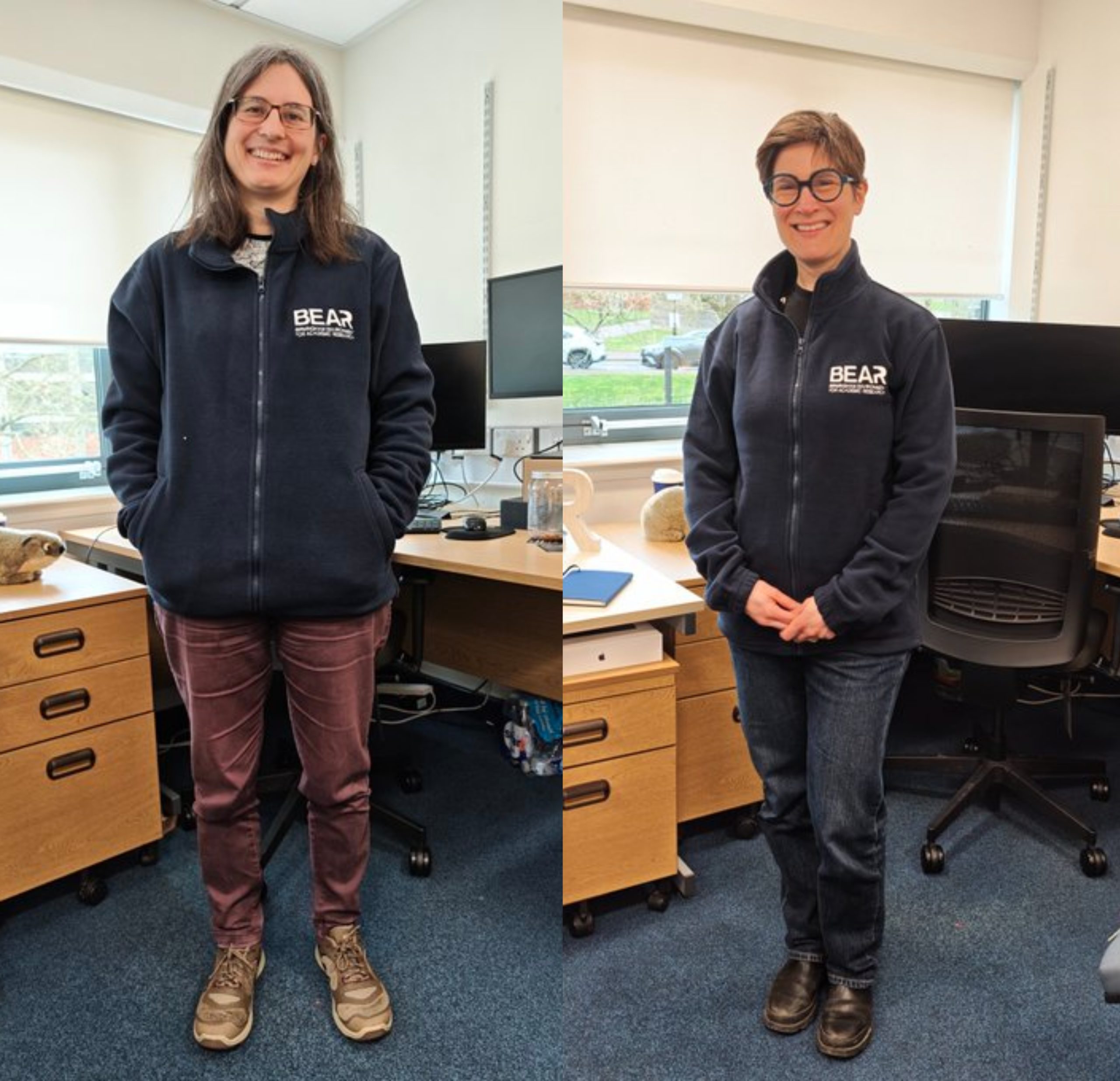
We are pleased to introduce Heather Turner and Ella Kaye as our newly joined Research Software Engineers. Heather and Ella are both funded by a grant from the Software Sustainability Institute, under the Research Software Maintenance Fund, and will be working on the project ‘Enabling the Next Generation of Contributors to R’. We look forward to Heather and Ella’s contributions as we continue to engage with these evolving international standards in software engineering.
Cooling works maintenance

This month, our Architecture, Infrastructure and Systems group have been busy with the maintenance work on the cooling systems, and migration of metadata to new storage servers – see the maintenance blog post for details. We are aware of the significant inconvenience caused by the planned and subsequent unplanned outages for both BlueBEAR and the Research Data Store and apologise for the inconvenience caused. We will be publishing a blog post in due course with more information about the situation. During the recent works we also made changes to improve GPU responsiveness, added 2,000 CPU cores and will soon be doubling the number of GPUs. For more details, please see our blog post on GPU and BEAR Portal changes.
BEAR Docs video tutorial: Creating virtual environments in JupyterLab
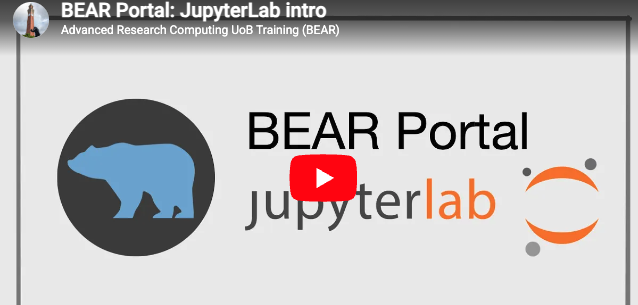
To help you get the most out of our services, we have released a new short video tutorial on the BEAR Docs pages. This six-minute guide demonstrates how to use JupyterLab within the BEAR Portal, specifically focusing on how to create a virtual environment for your research projects. We hope this practical resource provides a helpful walkthrough for both new and experienced users.
Upcoming Events
BEAR Challenge 2026 – only one week left to register
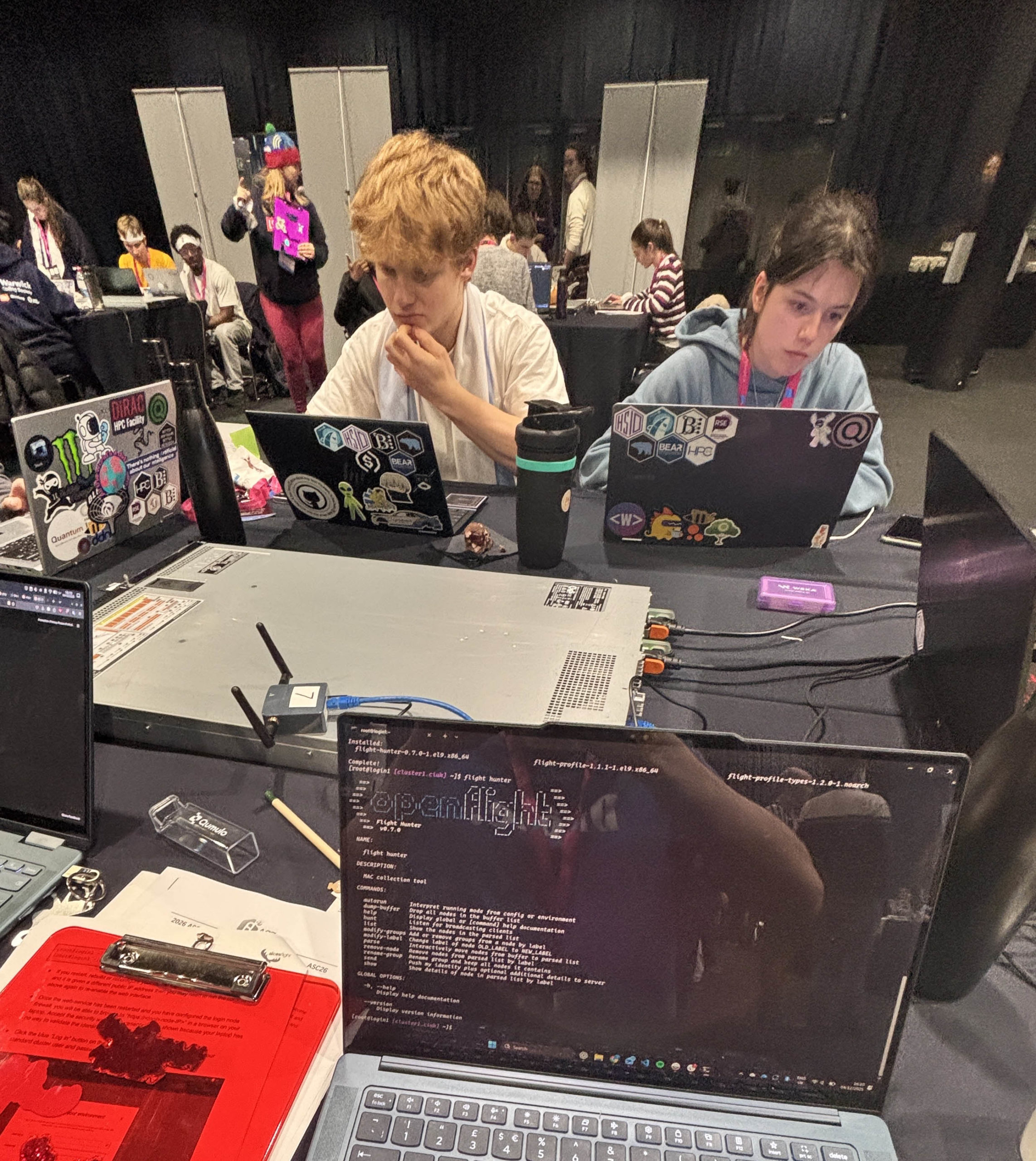
Registration for BEAR Challenge 2026 enters its final week on Monday! Open to taught students, past attendees have highlighted the benefits of attending, with team ‘Beariables’ progressing from HPC novices to national champions and earning a spot at the International ISC 2026 competition. Student David Adesoye-Amoo also leveraged skills gained to innovate his subsequent research project. If you have links with taught students (undergraduate or postgraduate) with some programming experience, please encourage them to apply via the Eventbrite page (deadline Friday 1 May).
Focus groups on Non-Traditional Output – starting May 12
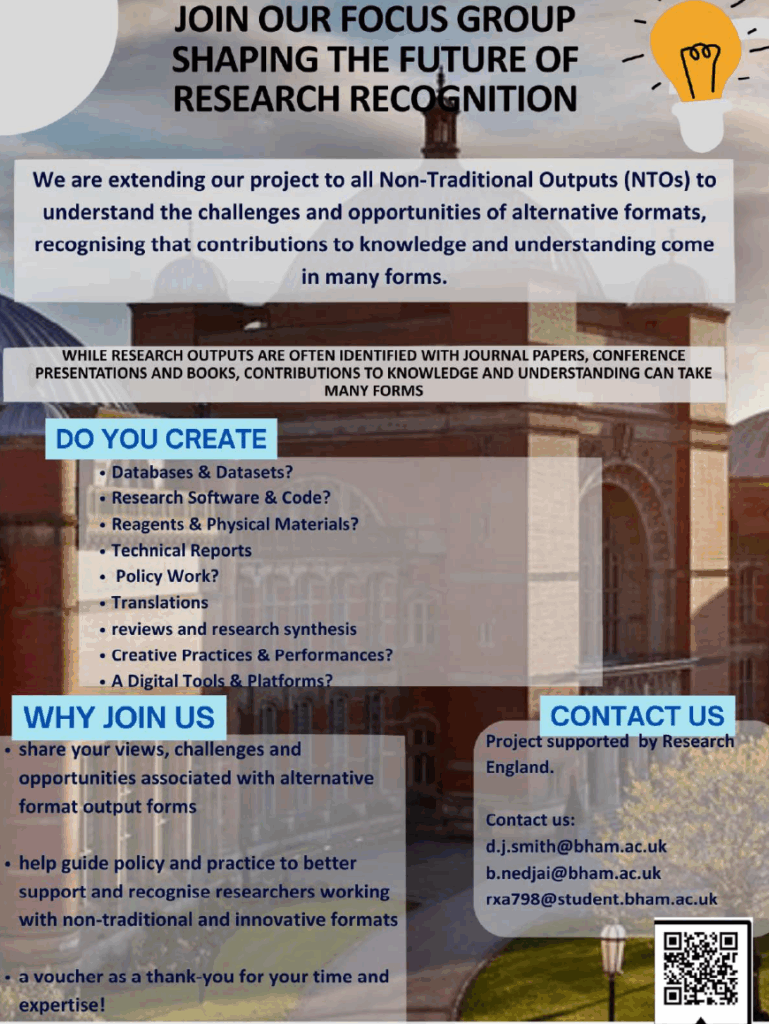
Are you involved in creating research outputs that go beyond traditional journal papers? A University-funded Research England project is currently inviting researchers of all career stages and roles (including technical and supporting) to join upcoming focus groups running from May 12. The aim is to understand the challenges and opportunities associated with alternative (non-journal) forms of research output such as software, reagents, translations, patents, datasets, technical reports, creative practices, policy work & performances. If you are interested in sharing your views, please register here for a focus group.
CHBH Hackathon registration open

On 28-29 May 2026, the Centre for Human Brain Health are holding a hackathonfeaturing talks and helpers from Psychology, Advanced Research Computing and MathWorks. Whether you’re new to hackathons or more experienced, they welcome you to join this exciting, collaborative, non-competitive event – working in Python, R, Julia, MATLAB and beyond. Tracks will depend on interest and may include experiment design, MRI, LLMs and Open Science. Open to researchers with all levels of experience. Please fill out this form to express your interest – Neuroscience Hackathon 2026.
Use of BEAR services
Research project: Exploring Julia for High-Performance Computing

Our latest blog post features a project by Dr Vincenzo Brachetta and Ritesh Moon exploring Julia on BlueBEAR. By benchmarking multi-core, distributed, and GPU-accelerated tasks, the study confirms Julia’s ability to deliver high-level usability alongside top-tier performance within our SLURM environment. This project is essential reading for researchers looking to bridge the gap between rapid prototyping and large-scale HPC execution.
BEAR case study booklet – volume 5
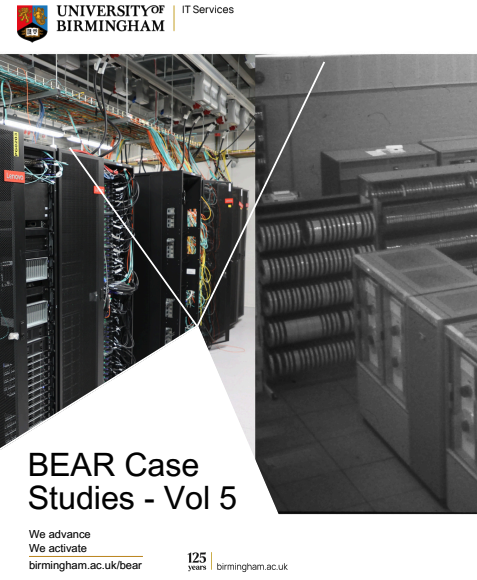
Are you interested in how researchers at the University use our various services in their research? Covering a wide variety of disciplines from life sciences through to AI, our compilation of case studies provides 23 different examples highlighting the breadth and variety of research supported by the Research Data Store and BlueBEAR supercomputer. Have a read of the case studies booklet here. If you would like to showcase your amazing research and write a case study/blog post, then please contact us at bearinfo@contacts.bham.ac.uk.
Number of supported publications since March
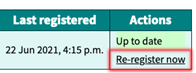
When we ask researchers to re-register their projects every 6 months, we also ask them to provide details of publications that have been enabled by using BEAR services. Since March, a further 20 publications have been registered, bringing the total on our database to 1702. Thank you to all who have helped provide this valuable information, which enables us to show the University that our services provide essential support for research. It is possible to add information on your publications at any time – see details on the Acknowledging BEAR webpage.
Opportunities for 1:1 support
BEAR drop-in session dates

We are currently holding monthly in-person drop-in sessions on the first Wednesday of the month on the first floor of Staff House (formerly Café Aroma). We also provide additional virtual drop-in sessions via Zoom for those not on campus or who require specialist help – check the drop-in webpage for updates, as well as details on how to join the sessions. Currently scheduled dates are also listed below:
- Via Zoom – Wednesday 22 April, 11:00-12:00
- Via Zoom – Thursday 30 April, 13:30-14:30
- In-person – Wednesday 6 May, 11:30-12:30 – Staff House, first floor (look for our banner)
- Via Zoom – Thursday 14 May, 13:30-14:30
- Via Zoom – Friday 22 May, 10:00-11:00
Missed last month’s newsletter?
Find March’s newsletter here. Sign up to receive the newsletter direct to your inbox by joining our bear-updates mailing list here (UoB login required), or ask to join via email at bearinfo@contacts.bham.ac.uk