
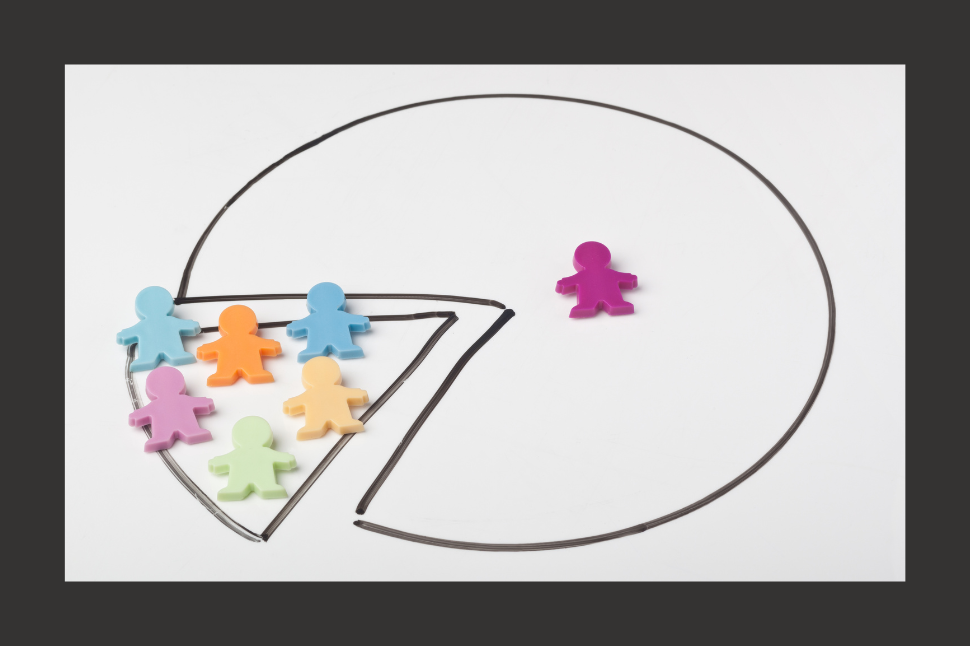
England’s economic and social landscape is deeply uneven. From productivity and income to health and education, stark geographical inequalities persist – and in many cases, are worsening. Despite years of policy attention, the UK’s highly centralised governance and fragmented funding systems have failed to deliver meaningful change.
But what if public funding was allocated in a way so that every place across England had a better chance at growth and renewal?
Research led by the University of Birmingham draws on extensive evidence, international case studies, and citizen engagement to offer a roadmap for reforming public funding allocation to reduce geographical inequalities in England.
Why does this matter?
Geographical inequality isn’t just a matter of fairness – it’s inefficient. When some areas are left behind, the whole country loses out on potential talent, innovation, and economic contribution. Spatial disparities also generate costs for public service provision to ameliorate their negative impacts. Yet current funding allocation – heavily dominated by short-termism, competition and fragmentation in recent years – often reinforces these divides and favours those areas with more capacity and resources to navigate the system.
The 2024 English Devolution White Paper promises change – but lacks a clear strategy for tackling geographical inequalities. Critics warn that public funding is once again being channelled toward areas with the quickest economic return, leaving elsewhere overlooked and under-resourced.
Principles for public funding allocation
In a report published in June 2025, the research team identifies ten guiding principles to shape a better public funding system. These include:
- Economy, Efficiency & Effectiveness – maximising value from public resources
- Equity – ensuring fairness and equality of treatment between people and places
- Devolution & Subsidiarity – decentralising powers and resources to the lowest suitable levels of authority
- Geographical Scale – recognising that different policy problems are better addressed at different geographical scales
- Accountability – clarify who is responsible for funding decisions so they can be held to account by the public
- Inter-Governmental Collaboration – align priorities and coordinate funding across national, regional, and local governments.
- Responsiveness & Place-Based Tailoring – adapt funding to reflect local needs, conditions, and opportunities.
- Stability – provide long-term certainty to support strategic planning and sustained impact.
- Participation – involve a broad range of stakeholders – including communities – in funding decisions.
- Monitoring & Evaluation – use robust data and evidence to track progress, learn what works, and improve over time
These principles aren’t just ideals – they’re practical tools to design better, more responsive funding allocation.
From tweaks to transformation – proposals for change
The report also outlines ten key problems with the current system and offers three levels of solutions for each:
- Incremental – small, quick wins (e.g. revised weightings for allocation criteria)
- Moderate – medium-scale reforms (e.g. revised objectives and target outputs and outcomes)
- Radical – big, structural shifts (e.g. new needs-based and more participatory approaches).
For example, to address the issue of weak local capacity, the research team’s proposals go from secondments between national and local government to constitutionally protected powers and resources for sub-national authorities.
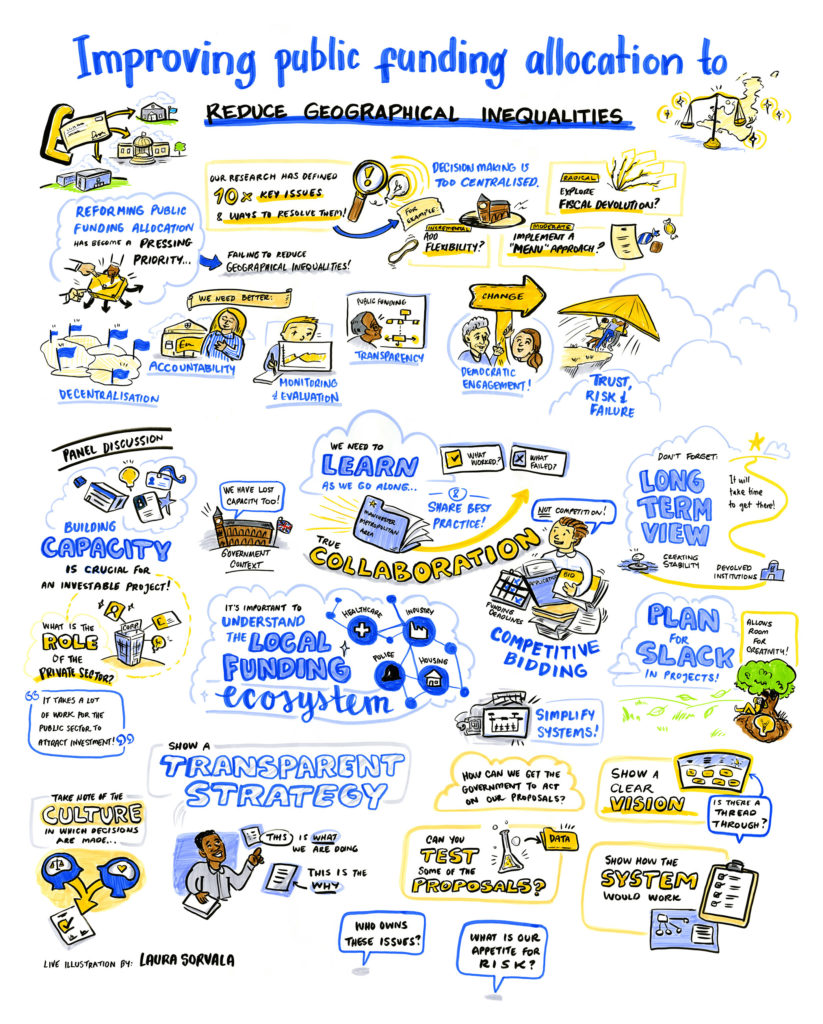
Next steps – turning ideas into action
The research team urges policymakers to embed the ten guiding principles into the design of future public funding allocation. Stakeholders at the sub-national level – from combined authorities to local councils and community groups – should assess and adapt these proposals within their own contexts to drive meaningful change.
Final thought
Reducing geographical inequalities is about building a stronger, more inclusive future for places and people. Improved public funding is a powerful lever to do this. But it will take bold thinking, genuine collaboration, and a willingness to do things differently.
This blog was written by Dr Charlotte Hoole, Research Fellow at City-REDI, University of Birmingham.
Disclaimer:
The views expressed in this analysis post are those of the authors and not necessarily those of City-REDI or the University of Birmingham.