

In September 2025, The Economist updated the Carrie Bradshaw Index, a playful yet insightful measure of housing affordability for solo renters across 100 U.S. cities. Named after the iconic character from Sex and the City, the index compares median incomes to the cost of renting a one-bedroom apartment, essentially asking: where can you afford to live alone?
Inspired by this, we’ve developed a West Midlands version of the Carrie Bradshaw Index, applying the same principle: local authority median household income divided by annual one-bedroom rental costs and then converted into an index whereby a score of 1.0 means rent is affordable at 30% of incomes. A score of 1.0 and above means 1-beds are affordable in the area with higher scores indicating greater affordability for solo living. Conversely, scores of below 1.0 indicate solo living is unaffordable with lower score indicating lower affordability.
Our analysis shows that:
- Birmingham offers better affordability for solo renters than London and other large cities Manchester, Leeds, Liverpool and Sheffield. This suggest Carrie Bradshaw’s New York lifestyle is more plausible in Birmingham than other comparable metropolitan areas.
- Within the West Midlands, several LAs outperform the national benchmark, indicating that solo living is not just feasible but potentially comfortable for many residents.
How Does the West Midlands Compare?
The national average Carrie Bradshaw Index in the U.K is 1.21 When we apply this benchmark to the West Midlands, most local authorities (LAs) sit above this line, suggesting solo living is relatively more affordable here than in many parts of the U.S.
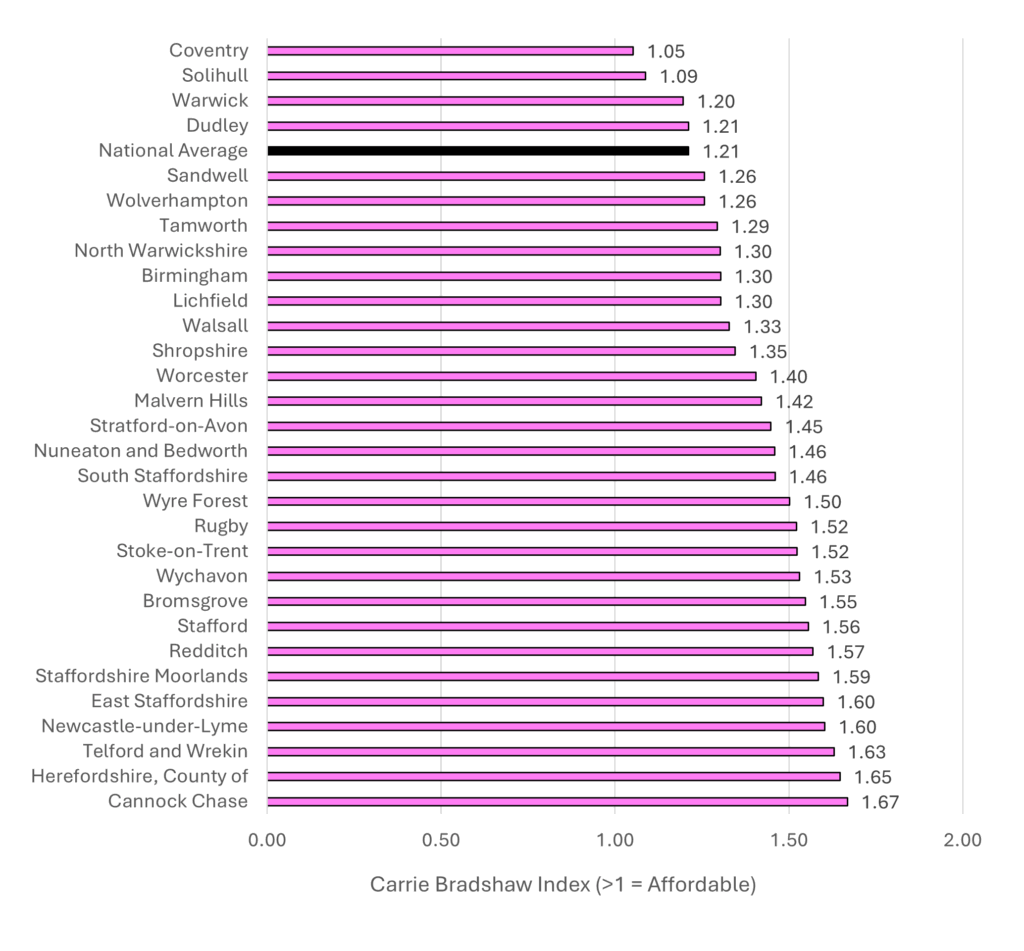
Figure 1. The Carrie Bradshaw Index for West Midlands Local Authorities
Source: ONS
The Carrie Bradshaw Index across West Midlands local authorities reveals notable variation in affordability, though all areas are found to be above the 1.0 threshold. Areas like Cannock Chase (1.67), Herefordshire (1.65) and Telford (1.63) are found to be the most affordable areas for solo living. Conversely Coventry (1.05), Solihull (1.09) and Warwick (1.20) are found to be the least affordable. Even within these LAs the ratio is driven by different factors, high rents drive lower affordability in Warwick where lower incomes drive unaffordability in Solihull.
Birmingham (1.30), the region’s largest urban centre, sits comfortably above the national benchmark, offering both affordability and urban amenities. In contrast, Solihull (3.9) falls just below the benchmark (1.21), indicating relatively higher rental pressure compared to income. These differences highlight the importance of granular, place-based analysis when considering housing policy and urban development strategies.
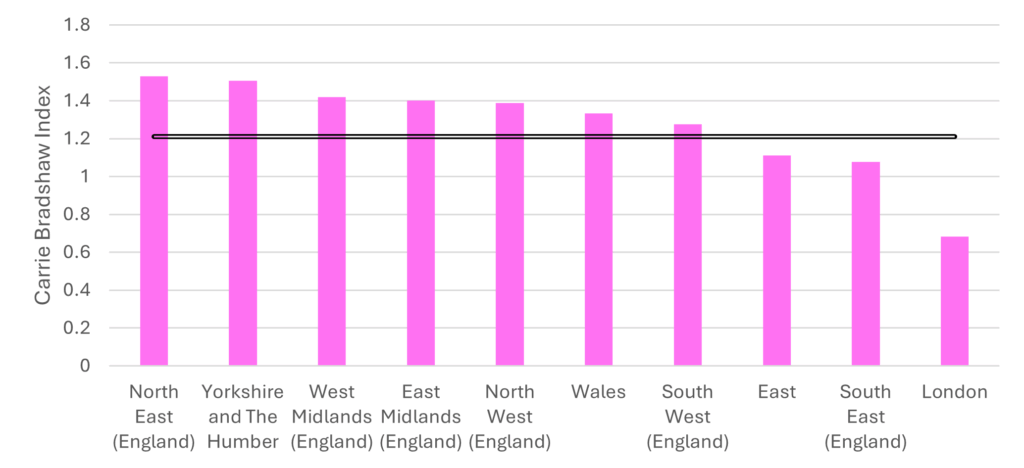
Figure 2. The Carrie Bradshaw Index for English and Wales Regions
Source: ONS
Regional Comparison: West Midlands Stands Out
The inter-regional Carrie Bradshaw Index comparison highlights the West Midlands as one of the most affordable regions in England for solo renters. With an average index of 1.21, it surpasses regions like the South East (1.08) and London (0.68), where high rental costs significantly outpace income levels. The North East (1.53) North West (1.39) and Yorkshire & Humber (1.50) also perform well. This suggests that, beyond affordability at the local authority level, the West Midlands region as a whole offers a compelling balance of income and housing costs making it an attractive destination for individuals seeking independence without financial strain.
Comparing Cities
Carrie Bradshaw famously lived in a city – so let’s look at the index across cities in England and Wales. When organised in this way Birmingham stands out again for being the most affordable city for its size in the UK with only seven other much smaller cities coming out more affordable. At the bottom end of the list we see London, Cambridge, Manchester and Bristol all falling short of the Carrie Bradshaw Index 1.0 level of affordability.
Table 1. The Carrie Bradshaw Index for cities in England and Wales
| City | Carrie Bradshaw Index | |
| 1 | Bradford | 1.70 |
| 2 | Derby | 1.58 |
| 3 | Stoke-on-Trent | 1.52 |
| 4 | Sunderland | 1.52 |
| 5 | Plymouth | 1.41 |
| 6 | Cardiff | 1.34 |
| 7 | Leeds | 1.31 |
| 8 | Birmingham | 1.30 |
| 9 | Wolverhampton | 1.26 |
| 10 | Southampton | 1.23 |
| 11 | Liverpool | 1.19 |
| 12 | York | 1.18 |
| 13 | Newcastle upon Tyne | 1.18 |
| 14 | Luton | 1.13 |
| 15 | Swansea | 1.13 |
| 16 | Leicester | 1.12 |
| 17 | Milton Keynes | 1.11 |
| 18 | Exeter | 1.09 |
| 19 | Sheffield | 1.09 |
| 20 | Nottingham | 1.07 |
| 21 | Coventry | 1.05 |
| 22 | Norwich | 1.01 |
| 23 | Reading | 1.00 |
| 24 | Oxford | 0.93 |
| 25 | Portsmouth | 0.86 |
| 26 | Brighton and Hove | 0.83 |
| 27 | Bristol, City of | 0.78 |
| 28 | Manchester | 0.73 |
| 29 | Cambridge | 0.73 |
| 30 | London (all borough average) | 0.68 |
Source: ONS
What Does This Mean for Policy and Planning?
Understanding where solo living is affordable can inform housing policy, urban planning, and economic development strategies. As more people choose to live alone whether for lifestyle, career, or personal reasons ensuring that cities and regions offer viable options becomes increasingly important.
The West Midlands, with its relatively high Carrie Bradshaw Index scores, may be well-positioned to attract and retain solo renters, especially younger professionals and creatives seeking independence without the financial strain of London-style rents.
What Does the Midlands Need to Attract Young Solo Professionals?
To fully capitalise on its relative affordability, the West Midlands must also offer the lifestyle assets that appeal to young solo professionals. This includes:
- Vibrant urban centres with cultural venues, nightlife, and creative spaces.
- Flexible and high-quality housing stock, including well-located one-bedroom flats and co-living options.
- Strong transport connectivity, both within cities and to other major hubs like London and Manchester but also enabling connectivity to green space and travel opportunities.
- Career opportunities in growing sectors such as tech, digital media, green industries, and professional services.
- Inclusive and diverse communities, where young people feel welcome and supported.
- Access to nature and wellbeing infrastructure, such as parks, gyms, and cycle routes.
By investing in these assets, the Midlands can position itself not just as an affordable place to live, but as a desirable one where solo professionals can thrive both personally and professionally.
Data Sources and Methodology
- Rental Costs: Based on ONS private rental data, focusing on one-bedroom properties (not studios).
- Income Estimates: Drawn from ONS small area income data, with methodology discussed here and in the technical report.
Limitations to Consider
-
- Income Data: Based on 2020 figures and residence-based estimates, not workplace earnings. This means commuting patterns aren’t captured, and figures may be outdated unless adjusted for inflation.
- Rental Definitions: Focused on one-bedroom properties, which may or may not include HMOs depending on classification.
- Household vs. Individual Income: The income data reflects household earnings, not individual earners, which may skew affordability perceptions for true solo living.
This blog was written by Dr Matt Lyons, Research Fellow and Rebecca Riley, Co-Director at City-REDI, University of Birmingham.
Disclaimer:
The views expressed in this analysis post are those of the author and not necessarily those of City-REDI / WMREDI or the University of Birmingham.