
In this blog, we hear from Dina, a second-year Ph.D. student in Chemical Education, School of Chemistry, who won the best short talk at the BEAR conference 2026.
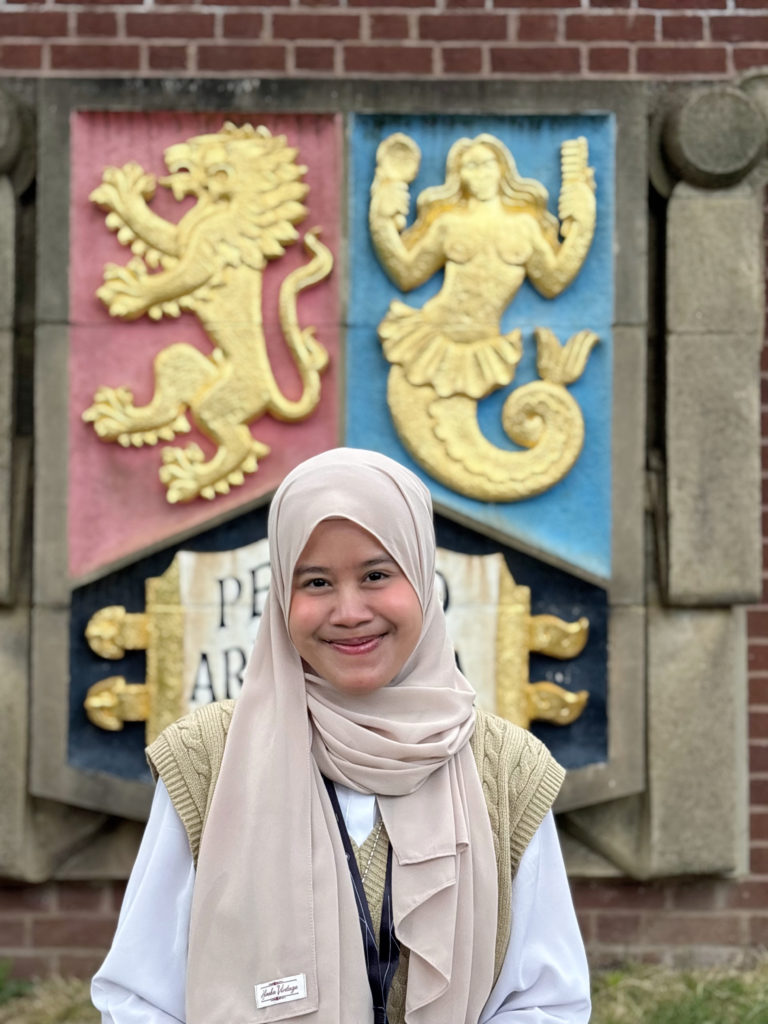
Dina, conducted research that intersects chemistry education, technology, and ethnochemistry. Ethnochemistry is a multidisciplinary field that explores the relationship between chemistry and the traditional wisdom, practices, and utilisation of natural resources by diverse cultural groups.
The study was set in Java, Indonesia, home to Javanese ethnic groups, and focused on 16-year-old students who experience difficulties learning information about chemical elements. We proposed TOKIJO (Tokoh Kimia Jowo, Javanese Chemical Figures), AI-generated images that transform elements into culturally familiar characters to help students learn chemistry.
TOKIJO is a personification of a chemical element. Each element represents a Javanese figure whose appearance, personality, and story are inspired by the element’s scientific properties and Javanese cultural heritage. For instance, oxygen that occurs as a diatomic gas is represented by the characters of Nakula and Sadewa, the identical twins of Pandawa, who are always together, hand in hand, holding a torch, surrounded by rusting metal and leaves. These illustrate the outcomes of chemical processes involving oxygen, such as combustion, rusting, and changes in leaf colour.
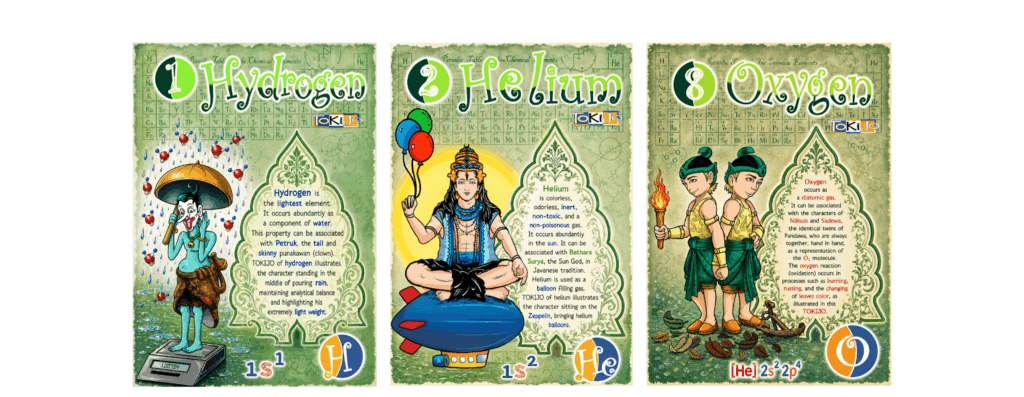
TOKIJO (Tokoh Kimia Jowo, Javanese Chemical Figures)
Each character is built through three-layer prompt engineering: scientific properties, real-world applications, and Javanese cultural references. Because using AI with cultural content carries real risks — misrepresentation, bias, questions of permission — every image was carefully reviewed for scientific accuracy, cultural respect, and pedagogical value. Thirty figures were validated by chemistry education experts, refined through workshops with 26 teachers across 18 schools, and tested with 30 students. Results showed enhanced student engagement, more dynamic classroom interaction, and a measurable increase in conceptual mastery of chemical literacy.
We were so pleased to hear Dina’s talk at the BEAR Conference. If you would like to participate in the BEAR Conference 2027, then do get in contact with us at bearinfo@contacts.bham.ac.uk.