
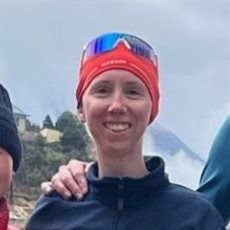
In this case study, we hear from Dr Kelsey Joyce, a Research Fellow in the School of Sport, Exercise and Rehabilitation Sciences, who is working to understand whether wearable sensors can help predict acute mountain sickness in trekkers at high altitude.
For thousands of trekkers every year, the journey to Everest Base Camp is the adventure of a lifetime. The higher you go, the thinner the air becomes, and some trekkers begin to feel the effects of acute mountain sickness (AMS).
The early symptoms are easy to dismiss. After days of trekking at altitude, sleeping badly and enjoying the occasional beer in a mountain lodge, headaches, fatigue and nausea don’t exactly stand out as warning signs.
But what feels like a bad day on the mountain can sometimes be the start of something much more serious. When altitude illness becomes severe, the safest treatment is often to get off the mountain as quickly as possible.
So what if we could spot the warning signs before trekkers even realised they were getting sick?
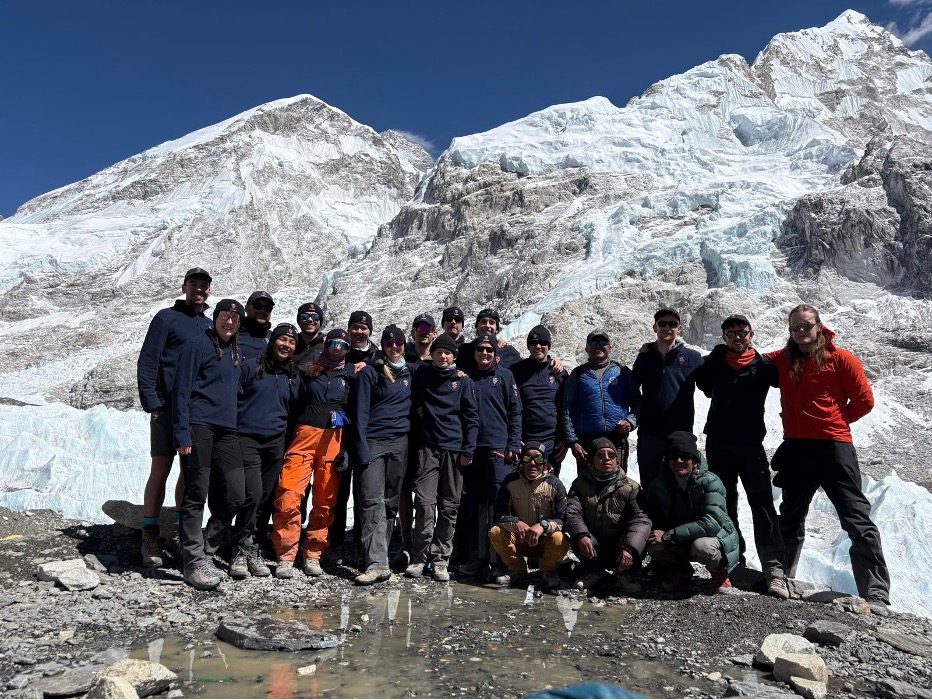
That was the question behind a recent study supported by the Birmingham Medical Research Expeditionary Society (BMRES). More than 200 trekkers volunteered to take part as they made their way towards Everest Base Camp. Instead of being recruited in a clinic or laboratory, they contributed to the study while undertaking one of the world’s most famous treks. Volunteers joined the study in Namche Bazaar, nearly 3,500 metres above sea level, and wore wrist-based sensors overnight as they continued their ascent to altitudes approaching 5,000 metres. The devices recorded blood oxygen levels and heart rate while they slept.
Few research projects involve collecting physiological data in the shadow of the world’s highest mountain. Researchers collected data while trekking alongside volunteers, sharing the same trails and tea houses and experiencing many of the physiological challenges they were studying.
Once the expedition was over, the focus shifted back to the slightly less challenging environment of Birmingham, where research computing helped make sense of the data. Research Software Engineers Helen Abbott and Adrian Garcia developed the data-processing and machine-learning workflows needed to analyse thousands of hours of overnight recordings. The team extracted more than 100 physiological measurements from the wearable data and combined them with information about participants’ ascent rate, age and other demographic factors.
We found that the wearable devices could detect physiological changes associated with developing AMS before participants showed clear symptoms. In other words, the body may begin signalling that something is wrong before a trekker is aware of it.
Although more work is needed, earlier warning of altitude illness could help both trekkers and expedition medics make safer decisions. Data collected on the slopes of the world’s highest mountain may eventually contribute to improved health monitoring in other remote and challenging environments.
The work was recently presented at the International Society for Mountain Medicine Congress in Hathersage, UK, and the European College of Sport Science in Switzerland, and has been submitted to Frontiers in Physiology as part of the research topic Bioconvergence — A New Frontier for Understanding and Enhancing Human Adaptations to Extreme Environments. By detecting the body’s response to altitude before obvious symptoms appear, wearable technology could one day help trekkers and climbers make safer decisions when it matters most.
We were pleased to hear how Kelsey was able to use what’s on offer from Advanced Research Computing. If you have examples of how it has helped your research, please contact us at bearinfo@contacts.bham.ac.uk.
We are always looking for good examples of the use of High Performance Computing to nominate for HPC Wire Awards – see our recent winner for more details.