

In this case study we hear from Oskar Soulas, a PhD student in Chemistry, who has been using BlueBEAR to investigate lithium–sulphur–nitrogen solid electrolytes for next-generation battery technologies. I am a second year PhD student in the Scanlon Materials Theory Group (SMTG) based at the University of Birmingham. The group uses powerful computational tools to understand … Continue reading “Atomic Simulation to Build Better Batteries”
Category: PGR students
Bio-inspired FSI and HPC-driven aerodynamic optimisation
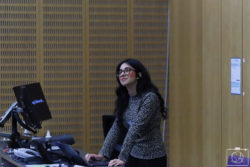
In this case study we hear from Hibah Saddal, a PhD student in Aerospace Engineering, who is using BlueBEAR to optimise aerodynamic performance. At the 14th BEAR Conference 2025, I had the opportunity to present my research carried out with my PhD advisor, Dr Chandan Bose, on bio-inspired fluid-structure interaction (FSI) problems, where we leveraged … Continue reading “Bio-inspired FSI and HPC-driven aerodynamic optimisation”
High-resolution soil hydrology analysis enabled by BlueBEAR

In this case study, we hear from Guilin Luo, a PhD student in the School of Geography, who has been harnessing BEAR’s advanced computing resources to investigate how temperate forest soils respond to climatic change. By integrating high-resolution environmental monitoring data from the Birmingham Institute of Forest Research (BIFoR) site, and using workflows in R … Continue reading “High-resolution soil hydrology analysis enabled by BlueBEAR”
BEAR helps delve into the infant gut and malnutrition
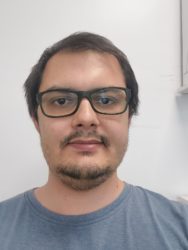
In this case study we talk to Leon, a PhD student in the Department of Microbes, Infection and Microbiomes, who is using bioinformatics of microbes that encompass the human gut microbiome. The human gut is inhabited by trillions of microbial cells and most of those cells have very important roles in human health. My work … Continue reading “BEAR helps delve into the infant gut and malnutrition”
Using BEAR to peel back the layers on potato genetics

In this case study we talk to Jack, a PhD student in Biosciences, who is using bioinformatics to understand plant genetics. I am a PhD student working in plant sciences supervised by Dr Lindsey Compton. My research focuses on using bioinformatics to understand plant genetics. Canopy architecture traits, like height and area, impact photosynthesis, drought … Continue reading “Using BEAR to peel back the layers on potato genetics”
Do restaurants care about consumers’ ratings?
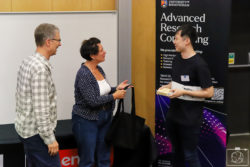
In this case study we talk to Zhuangchen Wu, a final year PhD student in Economics, he is also the winner of the best presentation at the BEAR Conference 2025. Zhuangchen is investigating customer anger and consumer ratings. Consumer anger or fair pricing theory (Rotemberg 2005, 2011) proposes that firms have stable prices because they … Continue reading “Do restaurants care about consumers’ ratings?”
How I used BEAR to understand investor behaviour in FinTech markets

In this case study we talk to Mohammad B M A J Aldoub, a PhD student in Economics, who is investigating how investors react to negative shocks in peer-to-peer (P2P) lending platforms. My research examines how investors react to negative shocks in peer-to-peer (P2P) lending platforms, with a particular focus on belief dispersion during uncertain times. P2P lending refers … Continue reading “How I used BEAR to understand investor behaviour in FinTech markets”
Reflections from the BEAR Conference 2025
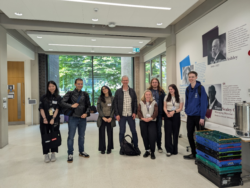
The 14th annual BEAR Conference, a vibrant event organised by postgraduates for postgraduates, took place on 22 May 2025 at the Alan Walters Building—and what a fantastic day it was! With 55 attendees, the conference was packed with insightful talks, lively discussions, and a strong sense of community. Dietmar Heinke, Chair of the BEAR User … Continue reading “Reflections from the BEAR Conference 2025”
Utilising BEAR workshops for Multimodal Analysis in Cognitive Translation Research

In this case study, we hear from Mingjie Zhang, a postgraduate researcher in the Department of Languages, Cultures, Art History and Music (LCAHM), who has been leveraging BEAR workshops to apply digital humanities methods in her project “Translating between Minds: Cognitive Insights of the Dao De Jing.” By integrating tools such as R, Python, Matlab, and GitHub—learned … Continue reading “Utilising BEAR workshops for Multimodal Analysis in Cognitive Translation Research”
Utilising BlueBEAR for radiation transport simulations and computational fluid dynamics

In this case study, we hear from Kiran Nutter (PhD student in the Nuclear Physics group), who has been utilising BEAR to study applications of gamma ray imaging. I am a PhD student in the Nuclear Physics group at the University of Birmingham, and a part of the EPSRC Centre for Doctoral Training in Topological design. … Continue reading “Utilising BlueBEAR for radiation transport simulations and computational fluid dynamics”