
Following 2025 Budget, I noted whether the Chancellor and Government can “sensible their way to prosperity”. Whether the 2026 Spring Statement marks progress towards economic prosperity is still to be seen. But there is, to her credit, a continued commitment by the Chancellor to stability and transparency in economic policy making.
Strong and stable version 2.0?
There are two stories running in parallel in the 2026 Spring Statement. On the one hand, it is a refreshing change that the government are going back to one major fiscal event per year. No new policies or knee-jerk changes were announced at the Spring Statement, and that certainty is welcome. The Spring Statement is more of a response to the Office for Budget Responsibility’s update on the state of the country’s finances. For businesses, local authorities and households looking at their budgets for 2026/27, there are no unexpected changes. But the backdrop global instability, rapid changes and uncertainty is still there.
The OBR headline trends are mixed with a softening in the short-term, with a view to improve in the medium-term:
- Real GDP growth is expected to slow from 1.4% in 2025 to 1.1% in 2026. However GDP is expected to grow stronger by 1.6% from 2027 onwards.
- Over the medium-term, GDP growth is expected to be around 1.5%, similar to the average over the 2010s.
- Nominal weekly wage growth is forecast to slow to around 3.5% in 2026 and then average 2.3% per year, broadly in line with the forecast from November 2025.
- Slowing wage growth contributes the CPI inflation rate falling from 3.4% in 2025 to 2.3% in 2026 and 2.0% from 2027.
- Labour market conditions continue to loosen with the unemployment rate expected to rise from 4.8% in 2025 to a peak of 5.3% in 2026.
- After peaking in 2026, the unemployment rate is expected to fall gradually to 4.1 per cent by 2030.
- Public sector net debt is expected to rise from 94.5% of GDP in 2025-26 to 96.5% of GDP in 2028-29, before falling to 95% of GDP in 2030-31.
- OBR central forecast is for public sector net borrowing to fall from 5.2 per cent of GDP (£153 billion) in 2024-25 to 4.3 per cent of GDP (£133 billion) this year.
- Public sector net borrowing is expected to fall from 5.2% of GDP (£153 billion) in 2024-25 to 4.3% of GDP (£133 billion) in 2025/26.
Listening to the mixed reviews in the Spring Statement reminded me of something. In the run-up to the 2017 General Election, then-Prime Minister Theresa May came under fire for repeatedly making claims about the strength and stability of her leadership.
The premise of promoting your work is understandable – where politicians look to control a narrative and promote the positive stories coming from their policies. But, also like Theresa May’s ill-fated slogan, they are built on the backdrop of high uncertainty. And no amount of rhetoric can change the economic realities facing families and businesses across the country.
The corridor of uncertainty
As with any economic forecasts, there is always an element of risk and the unknown. The Chancellor’s first fiscal rule is to run a budget surplus by 2029/30. Although the margin to meet this rule has increased by £1.9bn to £23.6bn, this still is razor-thin, by budget terms, with a margin of just 0.2% of government spending. This margin could be wiped out by any of the broader risks that the OBR acknowledges face the UK economy:
- Productivity growth remains one of the most important, but uncertain, forecast judgements. There could be a £90bn swing between the business-as-usual scenario of 0.5% productivity growth, and an optimistic scenario of 1.5% following a strong impact of AI on productivity.
- The geopolitical situation and global trade policy remain highly volatile. Conflict in the Middle East has escalated in the last week. The OBR acknowledge that this is not accounted for in the forecast and could have very significant impacts on the global economy, particularly energy markets.
- Long-term demographic change poses a risk to UK public finances. On the basis of unchanged government policy, debt could rise rapidly to reach around 275 per cent of GDP by the 2070s, driven mainly by a sharp rise in public spending as a result of the ageing population.
- A further risk is the future costs of welfare spending following the sharp growth of disability and health caseloads since the pandemic. Incapacity benefits caseloads will rise but at a slower pace than recently, with annual caseload growth falling to 1.3% in 2030-31 from 3.0% forecast over the next three years and the 7% average since the pandemic.
- The labour market outlook will also depend on the uncertain future level and composition of net migration.
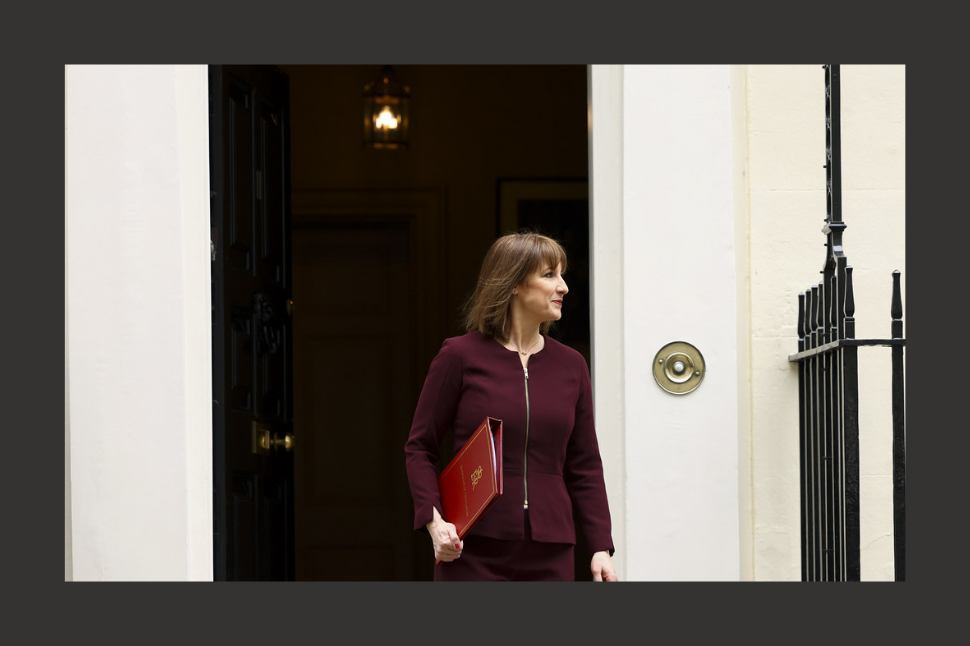
Rachel Reeves is still walking along the corridor of uncertainty.
The (lack of) distributional analysis
Economics and politics are about choices. Whether they are counted or not, the effects of the fiscal rules are going to affect different places and different groups of people in different ways. Unfortunately, the Spring Statement made no reference to the economic outlook for different places or different demographics of people. This is not a budget, so there is no modelling of new policy choices. There is no recognition of progress, or not, for different people in different places or how the current climate will affect different places. Rather, the headline figures focus on either the changes for the average person, or for national finances as a whole. Not understanding the economic realities for people facing economic and social inequalities risks (further) disengagement, political apathy, and polarisation. The Spring Statement is meant to be a check on the state of the UK economy, and the social and demographic inequalities, are very much part of our economic reality.
This blog was written by Hannes Read, Policy and Data Analyst, City-REDI, University of Birmingham.
Disclaimer:
The views expressed in this analysis post are those of the author and not necessarily those of City-REDI or the University of Birmingham.