
City-REDI along with Birmingham Business School hosted the 20th Regional Innovation Policies Conference 2026.
Under the theme of “Navigating Futures with Innovation: Resilient and Resurgent Regions”, over 110 participants from 18 countries had lively two days on Edgbaston campus.
Dr Chloe Billing reports on the discussions from the conference over the two days.
This event was funded by the LPIP Hub.
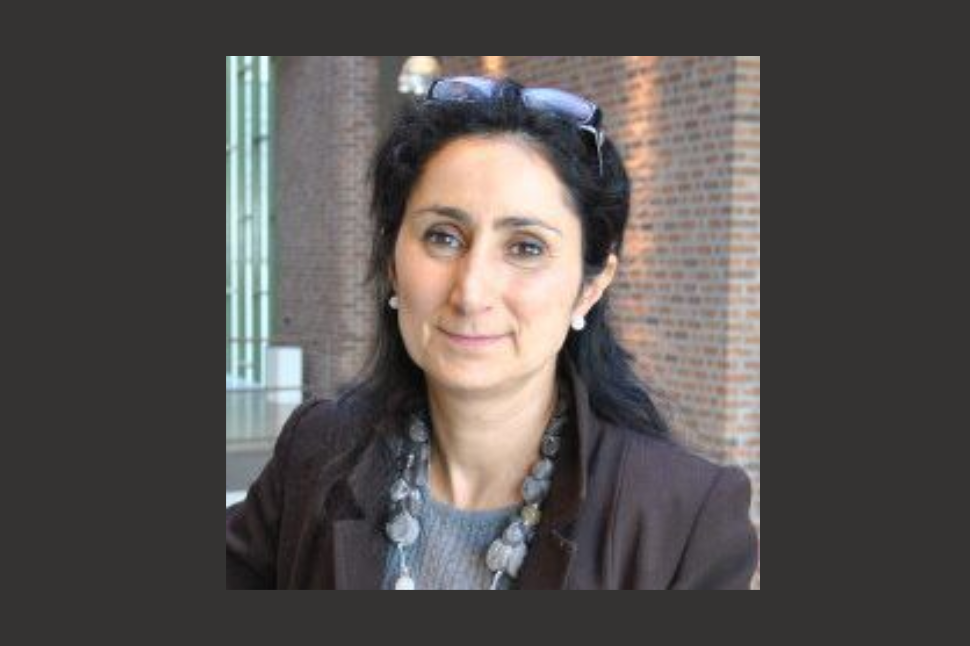
During the Conference we had a special session in memory of Professor Lisa De Propris of Birmingham Business School, Department of Management and also, City-REDI Associate. The session was titled “Regional Innovation Policies, Industry 4.0 and Skills in an Era of Disruptive Changes”, the session reflected the themes that ran through Lisa’s work. It brought together Professors Marco Bellandi, Sandrine Labory, Phil Tomlinson, alongside colleagues who shared personal memories working with Lisa at University of Birmingham, including Dr James Wilson, Professors Carlo Corrandini and Paul Lewis. Dr Monica Plechero, the conference chair of the 19th Regional Innovation Policies Conference in Venice opened the session by sharing the memories of Lisa and her keynote speech last year. Lisa had been a member of this year’s conference organising committee at University of Birmingham, and the session was a chance to reflect on her scholarship and on the person she was.
People at the heart of transition
During the keynote at last year’s conference in Venice, Lisa argued that the green and digital transitions must go beyond technology to take account of their social dimension, including inequality between places and between people, and the development of skills and talent. Her interest in skills, it was noted, came from how she related to people. She saw capabilities in early career researchers that they did not always see in themselves, and she pushed them to develop.
Industrial districts and a long collaboration
Marco Bellandi traced Lisa’s place in the industrial districts tradition, which began in Italy in the 1970s and became an incubator for fields such as regional innovation systems and clusters. He first met Lisa in the early 1990s, around the time of her PhD at the University of Birmingham on flexibility and innovation in industrial districts, through summer schools and seminars in Birmingham on industrial organisation and alternative models of development.
In 2007 Giacomo Becattini asked Marco to co-edit a handbook on industrial districts and to find a young and brilliant third editor. That was Lisa. A Handbook of Industrial Districts, published in 2009, drew together contributions from a large international community of scholars. Marco described Lisa’s commitment to a social vision of regional development, grounded in mobilising people’s energies for a better life for working people and their communities, and extending to international solidarity and solidarity with nature.
Local roots, global reach and a hatred of inequality
Sandrine Labory spoke of a friendship built on shared experience, as two women who had each made their lives in another country. She highlighted two insights from Lisa’s research. The first is that industrial development is locally rooted, even in a global economy. Lisa rejected the idea that globalisation makes location irrelevant, showing how local capabilities help firms reach international markets while global connections bring knowledge back to the region.
The second is that development is about people and communities. Lisa wanted innovation to benefit everyone and she hated inequality. Her 2024 paper in Regional Studies argued that industrial policies focused narrowly on technological change, without attention to the social and territorial transition, had deepened inequalities, and that the costs of globalisation had been dismissed for too long. Policies that back the most successful places and assume others will follow, she argued, do not work.
A body of work that will last
Phil Tomlinson first met Lisa as a PhD student at a summer school in Birmingham, when she was completing her own PhD, and they remained friends and collaborators for three decades. He described how her work bridged the British tradition of Alfred Marshall and the Italian tradition of industrial districts, before extending to creative industries, global value chains, regional development and Industry 4.0. Regional Studies was her home journal, alongside the Journal of Economic Geography, the Cambridge Journal of Economics and Research Policy.
Phil spoke of his own intellectual debt to Lisa, whose work on cooperation, innovation and governance gave direction to his career at a formative point. He presented a bound volume of her journal articles, around 60 papers over 30 years, as a lasting record of her contribution, which was warmly received by Professor David Bailey. Phil also announced plans for a special issue of Regional Studies, provisionally titled Technological Change, Local Production Systems and Policy, to be co-edited with Carlo Corradini and Sandrine Labory, with a provisional submission deadline of June 2027.
Colleague, mentor and friend
Colleagues from Birmingham shared memories from different times that spoke to Lisa’s generosity and energy. One recalled her pioneering work on the creative and cultural industries, which PhD students still cite, and her role as a teaching mentor. They remembered late nights writing EU research proposals, with Lisa full of ideas while everyone else was tired, and her belief in working hard while also nurturing the relationships and experiences that make academic life meaningful.
A former postdoctoral researcher remembered Lisa’s response when he said one of her ideas was impossible. If you think it is a good idea, she told him, you will find a way. She encouraged him towards economic geography, and when a paper was rejected after five rounds of review, she insisted the idea was strong and sent it to Research Policy, where it was published. He described this as the most important lesson of his early career.
Another colleague recalled during COVID, as senior academic leaders, every conversation they had with Lisa begun with how to support the colleagues they were responsible for. More recently, asked to lead a research theme in the Centre for Responsible Business at the Business School, Lisa chose to focus on helping early career researchers write papers and make grant applications. Even in their last conversation, her concern was to keep working, because she still had so much she wanted to do.
The session closed with words that captured what many in the room felt. Lisa was fierce, loyal, colourful, funny, caring, serious and energetic. As one colleague put it, “we’re a lot richer to have had her in our lives.”
This blog was written by Dr Chloe Billing, Research Fellow, City-REDI.
Disclaimer:
The views expressed in this analysis post are those of the author and not necessarily those of City-REDI or the University of Birmingham.