
In this case study, we hear from Krishnendu Naderi Varium, a Research Associate in Physics and Astronomy, who uses BlueBEAR to investigate how characterising black-hole binaries formed from the remnants of the very first stars in the Universe.

In my recent work, carried out in collaboration with Dr Patricia Schmidt and Dr Geraint Pratten from the University of Birmingham, we explored whether next-generation gravitational-wave observatories such as the Einstein Telescope and Cosmic Explorer could detect and characterise black-hole binaries formed from the remnants of the very first stars in the Universe.
Using Bayesian analyses and simulated gravitational-wave signals, we investigated how accurately these distant sources could be identified and their properties inferred. In particular, our results show how important sensitivity at low frequencies will be for studying binaries at extreme distances, potentially allowing us to probe sources at redshifts approaching 20 and learn about the formation of the first black holes. Hence, expanding our knowledge of early Universe stellar dynamics and cosmology.
The study involved computationally intensive simulations and Bayesian analyses to investigate how accurately the properties of these extremely distant sources could be measured. I used the University’s BlueBEAR high-performance computing facility to carry out the computational work, allowing me to run the large number of simulations and analyses needed to explore these sources.
This work has also been an exciting part of my broader research journey. Before making the paper public, I had the opportunity to visit Aachen, Germany for the Einstein Telescope Symposium in June, from 14–19 June, where researchers from across the gravitational-wave community came together to discuss the future of the observatory and the science it could enable. It was particularly exciting to discuss ideas around the very science explored in this work with researchers working towards the next generation of gravitational-wave astronomy.
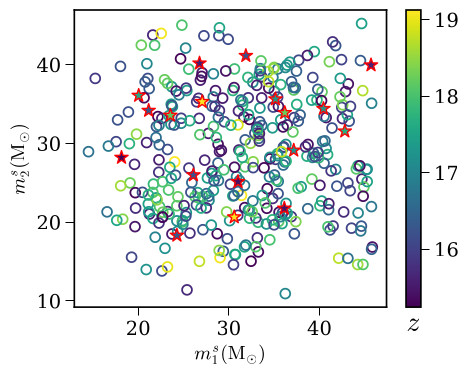
More recently, I was also selected as the Division 1 Coordinator of the Observational Science Board, allowing me to contribute to the wider scientific community and to help coordinate research efforts looking towards the future of gravitational-wave observations.
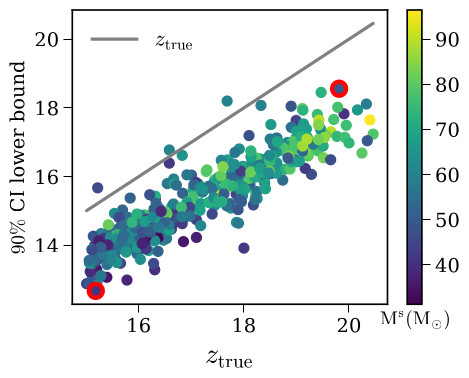
For me, this work highlights one of the most exciting aspects of gravitational-wave astronomy: we are developing instruments today that could allow us to study objects formed when the Universe was only a small fraction of its current age — effectively giving us a new way to explore the cosmic dawn.
We were pleased to hear how Krishnendu and the Gravitational Wave Astronomy group were able to use what is on offer from Advanced Research Computing. If you have any examples of how it has helped your research, please get in touch with us at bearinfo@contacts.bham.ac.uk.
We are always looking for good examples of the use of High Performance Computing to nominate for HPC Wire Awards – see our recent winner for more details.