
During 2026, there has been major work undertaken on the majority of the BEAR services provided by Advanced Research Computing, which has kept the Architecture, Infrastructure and Systems Group very busy! We understand the past year may have been a frustrating time for BEAR users due to more downtime than usual, but we hope you will see from the list of work below, that we are now in a much-improved position as a result.
In this blog post, we will cover the major work carried out on the:
- Data centre
- Research Data Store (RDS)
- Backup & archive system
- BEARCloud onsite private cloud
- Systems and applications
- Baskerville National Compute Resource (NCR)
Investing in data centre infrastructure
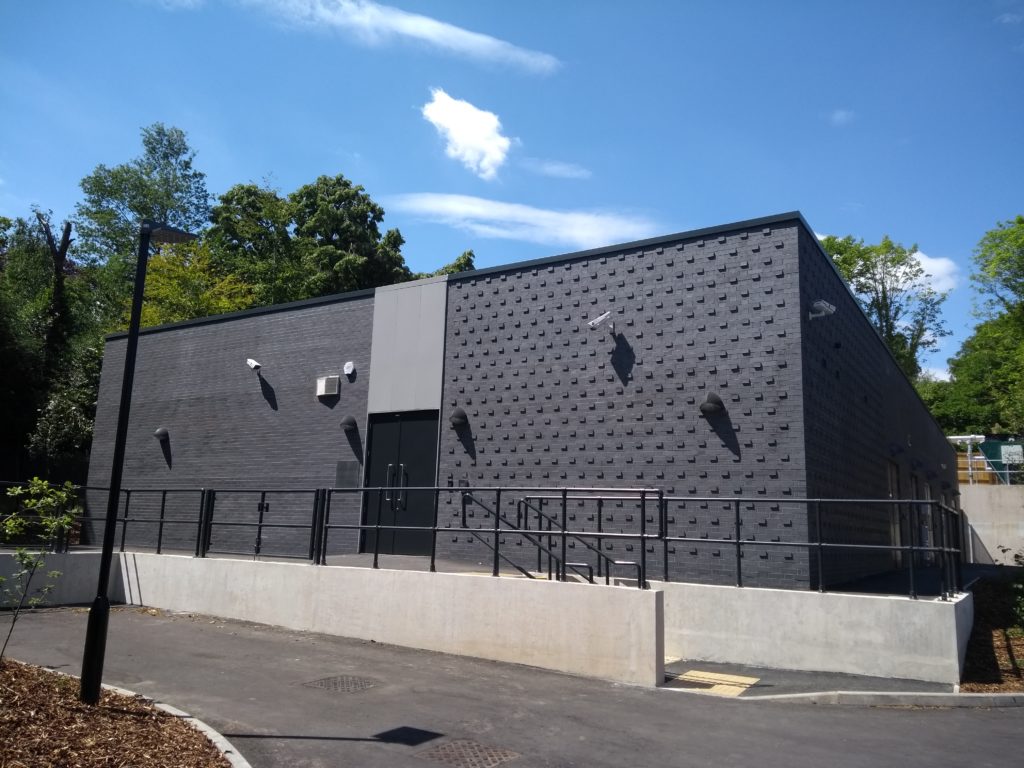
During 2026, the team has carried out a range of essential maintenance and infrastructure improvements within the data centre to ensure it remains ready to support future HPC and research computing services.
This work included draining and cleaning both the Direct Liquid Cooling (DLC) and Rear Door Heat Exchanger (RDHX) cooling loops, helping to maintain the efficiency and reliability of the cooling infrastructure – for more details see the cooling works blog post. The team also successfully decommissioned the Baskerville Tier 2 system, after funding came to an end in March.
To minimise disruption during the cleaning programme and to manage the challenges posed by summer heatwaves, temporary air-conditioning systems were installed to maintain a stable operating environment for critical equipment.
Benefits delivered
As a result of this work, the liquid cooling infrastructure has been refreshed and prepared for the next generation of hardware. This ensures the data centre is ready to accommodate new systems, including the Baskerville National Research Computing Resource (NCR) platform.
Looking ahead
Planning is now underway to support the future growth of research computing services, which includes investigating options for future data centre locations to meet long-term capacity and sustainability requirements. There is also a project in place with Estates to build a dedicated cold room within the current data centre, which will provide additional cooling capability for storage and help support future high-density computing deployments.
Research Data Store (RDS)
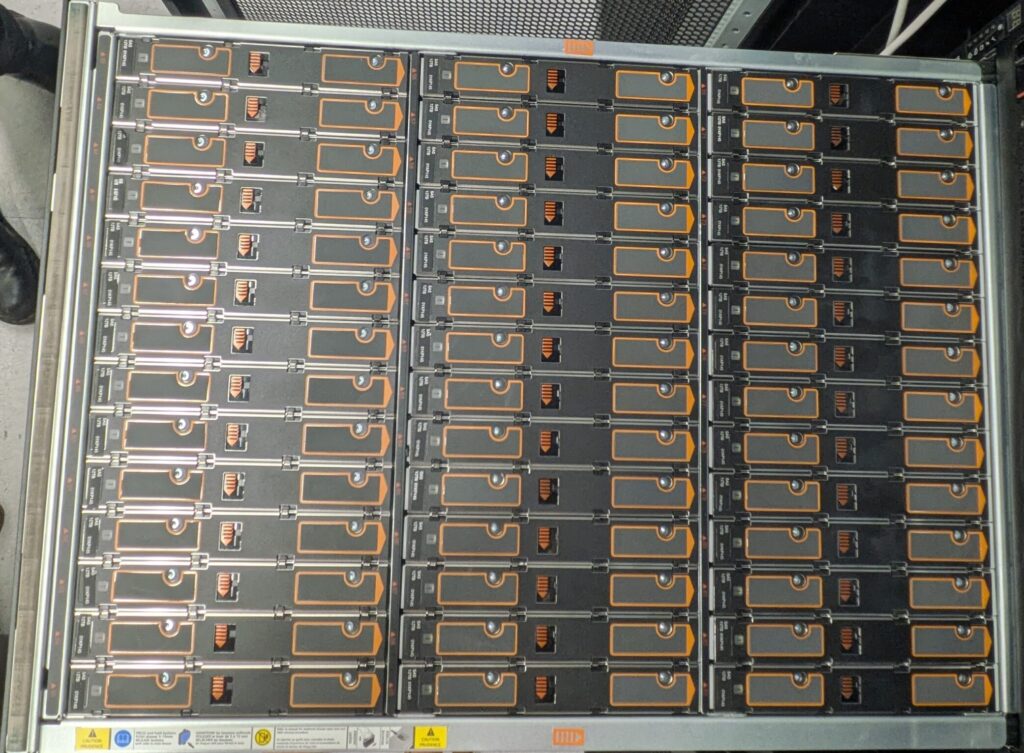
One of the key changes with the Research Data Store (RDS) was the migration of metadata to high-performance NVMe storage arrays. Previously, metadata was stored on HDD “spinning disk” storage, which was identified as a contributing factor to overall performance limitations. Moving this metadata to faster storage has helped reduce bottlenecks and improve responsiveness across the service.
In July, the hardware underpinning the Health Sciences portion of the RDS was replaced, providing an additional 6PB of capacity.
Benefits delivered
Early benchmarks and user feedback indicate that these changes have resulted in noticeably faster storage performance. The infrastructure has also become more resilient. Metadata is now replicated across multiple data centres, helping to ensure greater availability and protection against site-level issues. In addition, storage capacity for health sciences data has more than doubled, increasing from 5PB to 11PB, providing significantly more space to support current and future research projects.
Looking ahead
Work is now underway to improve resilience through cross-site replication of data, with completion currently targeted for December 2027. As this work requires extensive testing, some elements can only be validated during planned service shutdowns.
There is also ongoing work to migrate the remaining data from the CaStLeS (Compute and Storage for Life and Environmental Sciences) platform to either the Health Sciences storage server or the Research Data Store. This migration will help consolidate storage infrastructure and ensure researchers benefit from the latest platform improvements.
Modernising backup and archive services
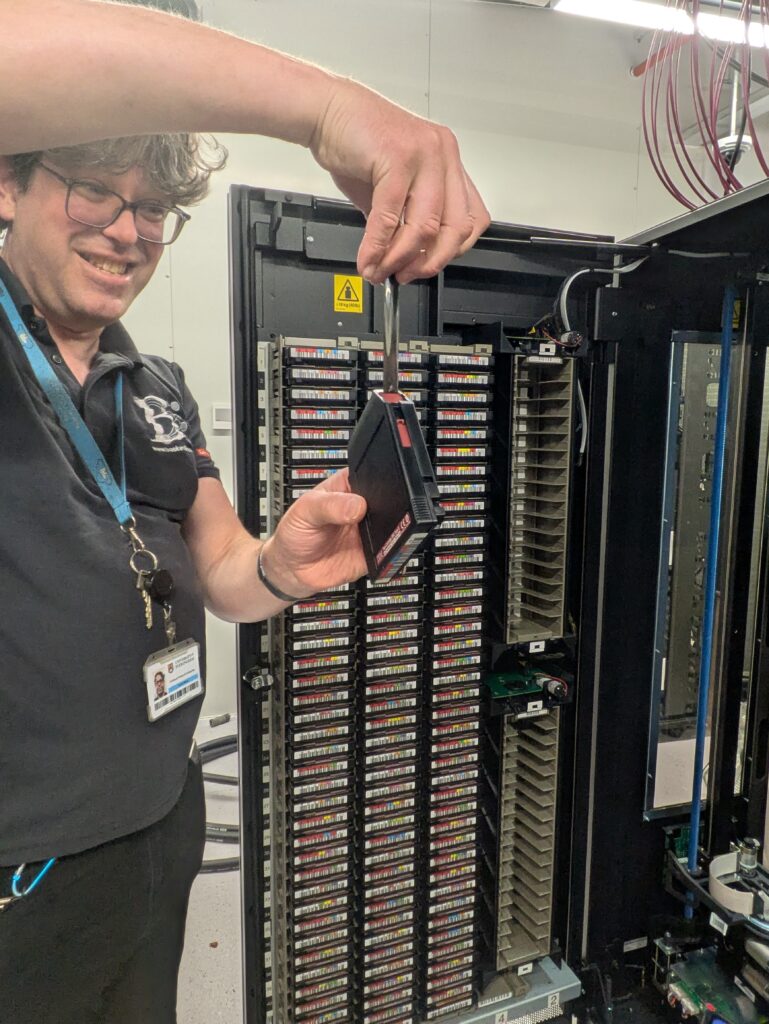
A new backup and archive solution has been designed and procured, bringing together updated IBM Spectrum Protect servers, Spectra Logic tape libraries, and a new Fibre Channel network. As part of the project, the backup and archive systems were relocated from the Park Grange data centre to other, cooler data centres on campus. This move not only improves operating conditions for the backup infrastructure but also helps optimise the use of available data centre space.
Benefits delivered
The new architecture provides a simpler, more streamlined design, helping to improve system performance and reduce operational complexity. Relocating the backup and archive infrastructure has also freed up valuable space within the Park Grange data centre, creating additional capacity for compute.
Looking ahead
The next phase of the project will focus on completing the configuration of the new servers and bringing the platform fully into service. Work is also planned to migrate data from both CLIMB and the RDS onto the new backup and archive platform. Further enhancements will include restructuring archived data into smaller, more manageable files, supported by indexing to make data retrieval simpler and more efficient.
In parallel, the team will be reviewing the overall service design, including backup schedules, retention policies and self-service archive capabilities. These improvements aim to provide researchers with a more flexible, efficient and user-friendly backup and archive service whilst ensuring the long-term protection of valuable research data.
Enhancing the BEARCloud onsite private cloud
The team has undertaken a major refresh of the BEARCloud onsite private cloud service, ensuring it continues to provide a reliable, efficient and flexible environment for research. A key part of this work involved redesigning and procuring new server infrastructure to replace hardware that had reached the end of its operational life. The team also reviewed and updated the available Virtual Machine (VM) sizing, ensuring they better reflect the capabilities of the new hardware and align with the ways researchers are currently using the service. Alongside these changes, a comprehensive “spring clean” removed outdated and unused artefacts, helping to streamline the platform and improve manageability. Lastly, the team has adopted an Infrastructure as Code (IaC) approach, which will make deployments more consistent, repeatable and easier to manage.
Benefits delivered
These improvements have extended the lifespan of the BEARCloud service whilst increasing the efficiency of the underlying infrastructure, and simplifying service management.
Looking ahead
The team plans to upgrade OpenStack to take advantage of the latest features, security enhancements and performance improvements. In addition, the existing Ceph storage platform will be replaced as part of the ongoing infrastructure refresh programme.
Strengthening systems and applications

A major focus to strengthen systems has been the upgrade of several core platforms. This included significant version upgrades to GitLab, ensuring access to the latest features and improvements for code development and collaboration. The team also deployed a new version of Salt, the configuration management platform used to manage systems at scale, and completed major upgrades to Red Hat Satellite, which is used to manage and maintain Linux-based infrastructure.
As part of the Satellite upgrade programme, virtual machines across the environment were successfully migrated to the new platform version, helping to standardise management and support processes.
Benefits delivered
These upgrades have introduced a number of improvements for users and administrators alike. Within GitLab, users now benefit from enhanced search functionality, making it easier to discover projects, code and documentation. The potential for a container registry has also been investigated, whilst authentication has been integrated with the University’s Single Sign-On (SSO) service, providing a smoother and more secure login experience.
Building the Baskerville National Compute Resource

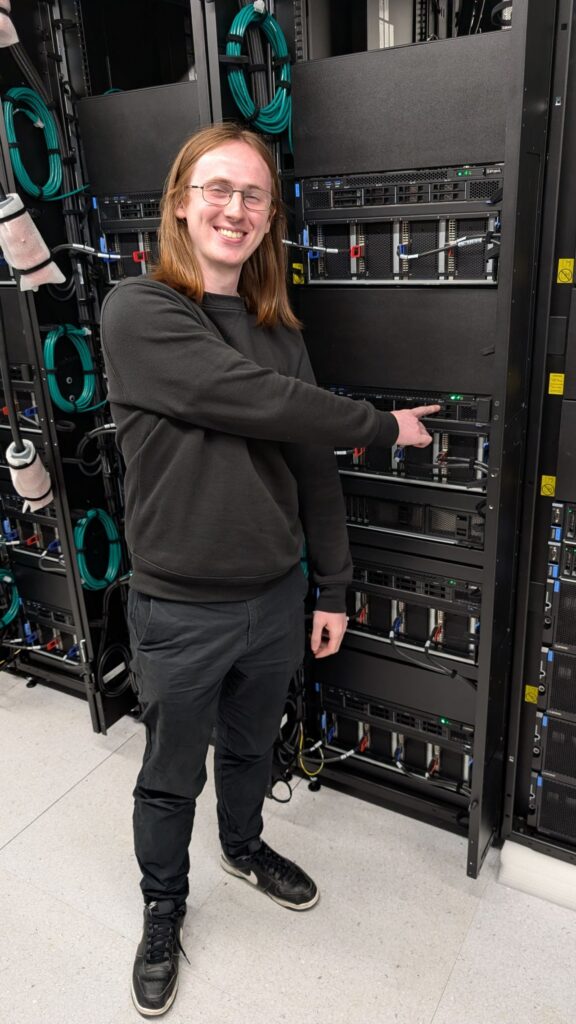
One of the most significant projects undertaken this year has been the procurement and installation of the Baskerville National Compute Resource (NCR), a major UKRI investment that will expand high-performance computing capabilities and provide researchers with access to powerful new computational resources.
The project has progressed through several key phases, beginning with the design and procurement of the system, followed by its delivery and physical installation within the data centre. Preparing the platform for operation requires extensive infrastructure work. This included installing new hosing for the Direct Liquid Cooling (DLC) system, configuring network and firewall services, racking servers and storage equipment, and completing the substantial cabling work needed to support the new system. Alongside the technical deployment, planning activities were undertaken to support future ISO 9001 and ISO 27001 accreditation processes, helping to ensure the service meets recognised quality and information security standards.
Benefits delivered
The major outcome of this work is the successful installation of a new National Compute Resource, which will be made available to researchers in the coming months. Once fully operational, Baskerville NCR will provide advanced computing capabilities to support a wide range of research activities, enabling users to tackle increasingly complex computational challenges and data-intensive workloads.
Looking ahead
The next phase of the project will focus on bringing the platform into production and ensuring it is easily accessible to the research community. Planned work includes integration with the NCR OpenPortal platform, providing streamlined access to the service, plus integration with MyAccessID to support federated authentication and simplify user access across institutions. The team will also complete the initial system configuration, install the software required by researchers, and continue preparations for ISO accreditation.
Summary
Over the past six months, Advanced Research Computing has delivered major improvements across its research computing infrastructure, enhancing performance, resilience and capacity for researchers. Key achievements include upgrading the Research Data Store with faster NVMe-backed metadata storage and increased capacity, refreshing datacentre cooling infrastructure, modernising backup and archive services, renewing the BEARCloud onsite private cloud, and upgrading core systems such as GitLab. Alongside these enhancements, significant progress has been made on the new Baskerville National Compute Resource (NCR), which is now installed and entering its final stages of configuration. Together, these developments provide a stronger foundation for future growth and will help ensure researchers have access to secure and reliable research computing services for years to come.