

The following blog post has been written by Yaru Zhou, who is from the organising committee of the BEAR Conference 2026.
The 15th Annual BEAR PGR Conference brought together postgraduate researchers from across the University of Birmingham for a day of interdisciplinary discussion centred around this year’s theme: AI x Integrity. Sponsored by Lenovo and NVIDIA, the conference explored not only cutting-edge research, but also the ethical questions and responsibilities emerging alongside rapid developments in AI.
Morning session: Shaping Education & Advancing Computing
The day began with a series of lightning talks showcasing the breadth of research being undertaken across the University. Topics ranged from stem cell modelling and sensory AI to educational storytelling in chemistry and the use of large language models for analysing tender documents. Despite the diversity of disciplines represented, a common thread quickly emerged: researchers are increasingly combining computational methods with domain expertise to tackle complex real-world problems.
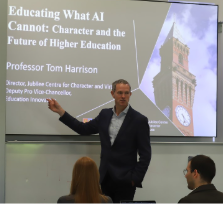
Our morning keynote speaker, Professor Tom Harrison, reflected on how AI is reshaping higher education. Rather than focusing solely on technological change, the talk challenged attendees to think more broadly about the purpose of education itself, highlighting the importance of human-centred and virtue-based approaches in an AI-enabled world.
The long talks that followed demonstrated the depth and technical sophistication of BEAR-enabled research. From Bayesian optimisation for bioinspired underwater propulsion, to computational protein design and simulations of morphing wings under turbulent conditions, the session highlighted how advanced computing is enabling increasingly ambitious and interdisciplinary research projects.
Lunch & Interdisciplinary Networking
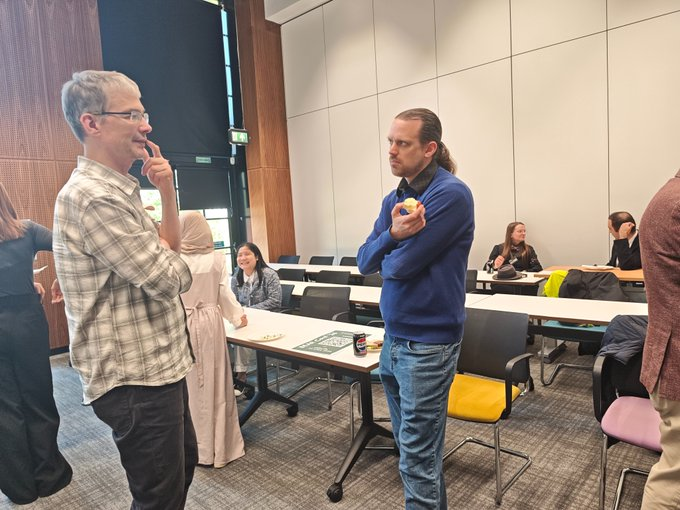
Lunch provided an opportunity for attendees to continue discussions informally, with researchers networking across disciplines over complimentary food and drinks. One of the strengths of the BEAR PGR Conference has always been its ability to create connections between researchers who may otherwise never encounter each other’s work.
Afternoon Session: Ethics, Governance, and Research Integrity
The afternoon session continued with a mix of lightning and long talks exploring topics including GPU-accelerated simulations, green finance policy, AI governance, and Arabic mental health NLP research. Across these presentations, the theme of responsible and ethical AI remained highly visible — not only in discussions around regulation and governance, but also in questions of transparency, evaluation, and human-centred design.
Another highlight of the afternoon session came from Qian Xu, who presented an AI-assisted toolkit designed to support seminar teaching. The project explored how AI can be used not to replace educators, but to enhance teaching practice by supporting interaction, organisation, and learning engagement while keeping human judgement and decision-making at the centre of the educational process.
Our afternoon keynote speaker, Dr Scott Summers from the University of East Anglia, delivered an insightful talk on maintaining academic research integrity in the age of generative AI. The session emphasised the importance of responsible and transparent AI use within research, reinforcing many of the themes discussed throughout the day.
Panel Discussion & Conference Awards
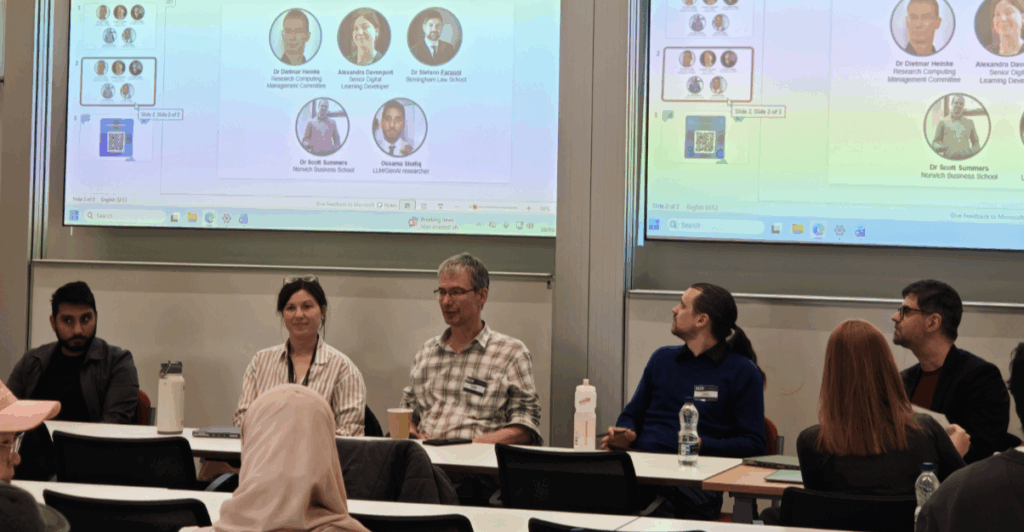
The conference concluded with a panel discussion featuring Ossama Shafiq, Alexandra Davenport, Dr Dietmar Heinke, Dr Scott Summers, and Dr Stefano Faraoni. The panel brought together a range of perspectives on AI, research practice, and integrity, leading to thoughtful discussion and audience questions on both the opportunities and challenges facing researchers today.
Finally, the conference closed with the presentation of the conference awards. Congratulations to our winners:
Best Long Talk: Yukesh Karki, for his presentation on bioinspired underwater propulsion.
Best Lightning Talk: Dina, for her creative and engaging presentation on chemistry storytelling.
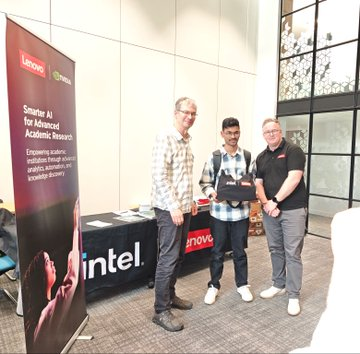
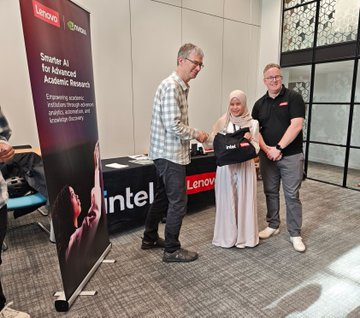
As the BEAR PGR Conference reaches its 15th year, it continues to demonstrate the value of interdisciplinary research communities and the growing role of advanced research computing across an increasingly diverse range of disciplines. This year’s conference highlighted not only technical innovation, but also the importance of ensuring that developments in AI remain ethical, transparent, and human-centred.
Voices from the Organising Committee
Simone Ausilio (Chair): I have been happy to organise a conference that could help answer some very actual and pressing issues around the impact of AI on research integrity.
Aimee Crisp (Chair): It was a pleasure to be part of a unique opportunity and interdisciplinary team. This event helped to strengthen and develop a range of skills, and I would highly recommend being involved.
Yaru Zhou (Secretary): Organising the conference required the collective effort of the entire team, involving stakeholder communication, budget management, event promotion, and logistics. It was challenging but absolutely worthwhile!
Kyra Scott (Website & Advertising Lead): It was an absolute pleasure to work alongside a fantastic team of PGRs and university staff from diverse academic disciplines. Being part of the organising committee provided a valuable opportunity to step outside the lab, meet new people, and broaden my skillset.
Arjun Shergill (Social Media Lead): I really enjoyed contributing to the BEAR committee by supporting its promotion through posters, LinkedIn outreach and email communications! It helped me develop stronger communication skills while highlighting the importance of clear outreach in academic conferences.
Yukesh Karki (Treasurer): It was an honour to be part of the organizing committee for the BEAR Conference 2026. The experience taught me lessons that went far beyond event planning, and I would highly recommend getting involved.
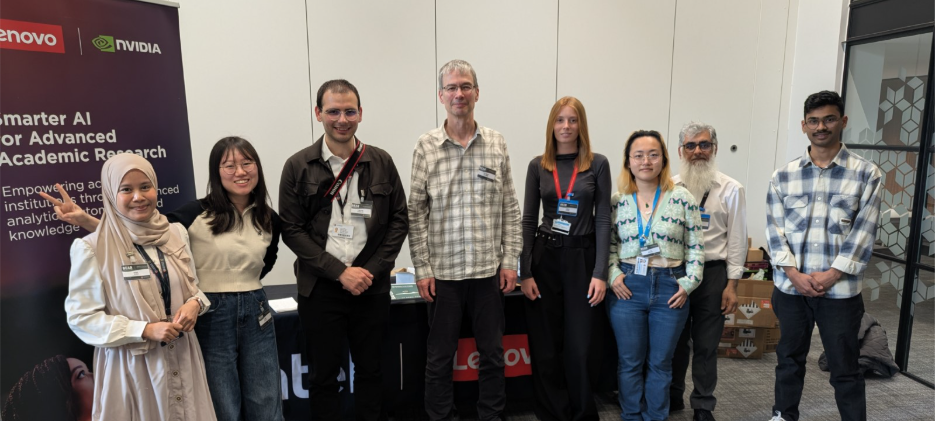
If you would like to help out in our next BEAR Conference, you can find out more in our blog post about being in the organising committee, or email us at: bearinfo@contacts.bham.ac.uk