
In this case study, we hear from Paolo Passaretti, a postdoc in Cancer and Genomic Sciences, who is investigating how cells copy and protect their genomes during DNA replication.
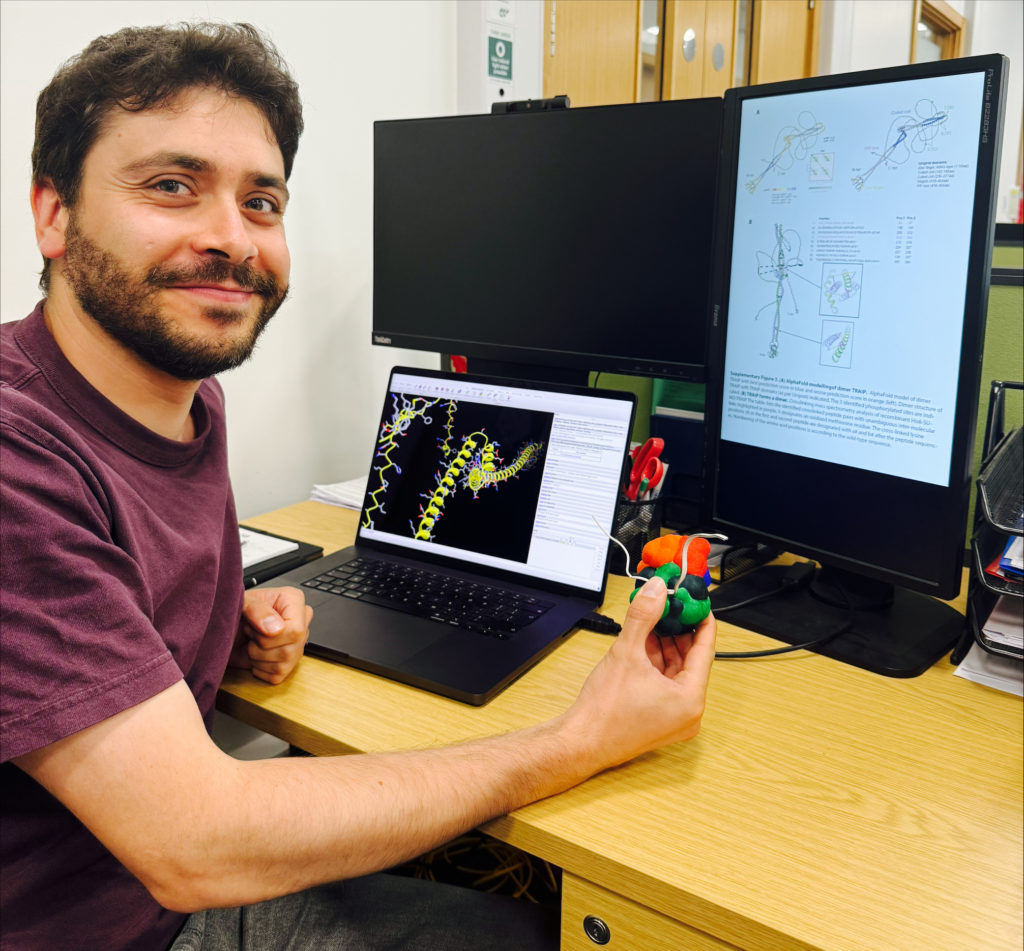
I am a postdoctoral researcher in Prof Aga Gambus’ Laboratory, in the Department of Cancer and Genomic Sciences, where we study how cells copy and protect their genome during DNA replication. My own work combines biochemistry, cryo-electron microscopy and computational structure prediction, and BlueBEAR has become an important part of that toolkit.
I recently contributed to two studies led by colleagues in the lab, both of which were published in Nucleic Acids Research. The first, led by Dr Georgia Kingsley, showed that the protein DONSON has an essential role in starting DNA replication, helping to assemble the active helicase at replication origins. The second, led by Dr Divyasree Poovathumkadavil and Dr Alicja Reynolds-Winczura, showed how phosphorylation of the ubiquitin ligase TRAIP is essential for mitotic replisome disassembly.
For both projects, I used BlueBEAR to run AlphaFold structure predictions of the proteins and complexes involved, helping the team interpret the experimental results and understand how these proteins fit together.
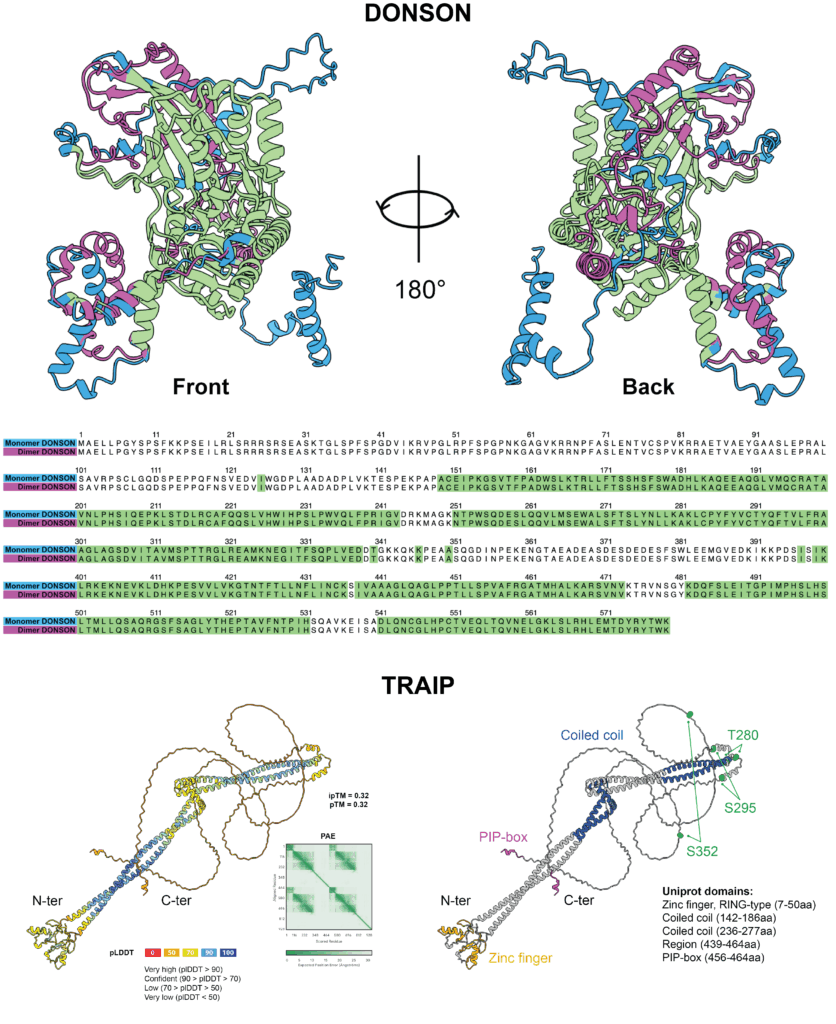
AlphaFold is demanding to run, and access to BlueBEAR’s GPU nodes made it practical to generate and test these models without specialist hardware of my own. This has become a routine first step that supports the experimental work in our group.
We were so pleased to hear how Paolo was able to make use of what is on offer from Advanced Research Computing. If you have any examples of how it has helped your research, then do get in contact with us at bearinfo@contacts.bham.ac.uk.
We are always looking for good examples of the use of High Performance Computing to nominate for HPC Wire Awards – see our recent winner for more details.