


City REDI is a research institute focused on developing an academic understanding of major city regions across the globe to develop practical policy which better informs and influences regional and national economic growth policies. Each week we publish a series of blogs on cities, economics, business, politics, regional development, local government and skills, highlighting our … Continue reading “Sign up to the City-REDI Mailing List”
Dr Charlotte Hoole returns to City-REDI

I’m excited to return to City-REDI after temporarily parting ways to take up the opportunity to be an ESRC Postdoctoral Fellow. Here’s a quick summary of what I’ve been doing whilst I’ve been away and what I’ll be working on now I’m back. As an ESRC Postdoctoral Fellow, I was very fortunate to be able … Continue reading “Dr Charlotte Hoole returns to City-REDI”
Adapting, Innovating and Preparing for the Near Future: Brexit
This blog post has been produced to provide insight into the findings of the Birmingham Economic Review. The Birmingham Economic Review 2019 is produced by City-REDI, University of Birmingham and the Greater Birmingham Chambers of Commerce, with contributions from the West Midlands Growth Company. It is an in-depth exploration of the economy of England’s second … Continue reading “Adapting, Innovating and Preparing for the Near Future: Brexit”
City-REDI Seminar Series: Predicting the Past: A Machine Learning Approach to Detect Innovative Firms in Time of Crisis
Presenter: Marco Guerzoni, Associate Professor of Applied Economics, Department of Economics and Statistics “Cognetti de Martiis”, University of Turin On the 23rd of October 2019, Marco Guerzoni presented the first City-REDI seminar of 2019. You can watch a video of the presentation below (Apologies but there is a slight buzz on the recording). Abstract: This … Continue reading “City-REDI Seminar Series: Predicting the Past: A Machine Learning Approach to Detect Innovative Firms in Time of Crisis”
Launch of the Birmingham Economic Review 2019
This year’s Birmingham Economic Review shows Birmingham is on a roll, but challenges around income inequality and deprivation remain. This year’s Birmingham Economic Review – a collaboration between Greater Birmingham Chamber of Commerce and City-REDI – was launched last week to a packed room of delegates from across the city-region. The event was … Continue reading “Launch of the Birmingham Economic Review 2019”
West Midlands Economic Monitor: October 2019
October’s edition of the West Midlands Economic Monitor is now available for you to keep up to date with recent developments in the region. The headlines for this month’s monitor are: The WMCA have signed a contract to order 21 new battery-operated trams to operate on the new Edgbaston line making the region. They will … Continue reading “West Midlands Economic Monitor: October 2019”
What is Transport Resilience?

Welcome to part three in our new series “What is…?” where we explain the language, terms and ideas used in our day-to-day work. Other blogs from the series include: What is GVA? What is Smart Specialisation? What are Industrial Clusters and Economies of Agglomeration? Definition and description Transport is necessary at the national and international … Continue reading “What is Transport Resilience?”
Employers Wary of Hiring Refugees and Migrants to Help Fill Shortages Need Help Understanding the Law

A recent survey I conducted of employers in Coventry in the West Midlands found that while 80% of the businesses we interviewed had hard-to-fill job vacancies, less than 5% had employed a refugee and nearly one-third had never even considered hiring one. Yet, for most refugees, integration into their new home is heavily dependent on … Continue reading “Employers Wary of Hiring Refugees and Migrants to Help Fill Shortages Need Help Understanding the Law”
Is the Government Going to ‘Make Buses Great Again’?
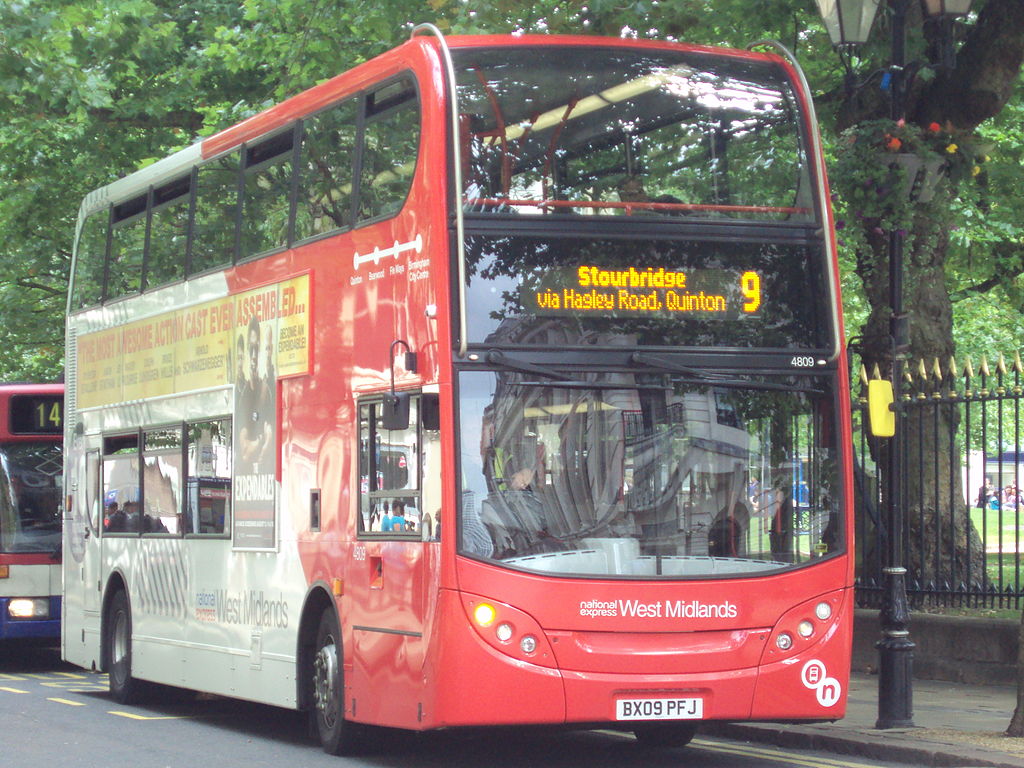
At the Conservative Party Conference, the Government seemed adamant to talk about buses. But, for what reason would the Government want to make buses a key transport-policy subject? At the conference, the Chancellor, Sajid Javid, proclaimed; “Buses haven’t been given the attention they deserve from politicians. But they are still the backbone of our public transport … Continue reading “Is the Government Going to ‘Make Buses Great Again’?”
How Neoliberal Governance Can Promote Responsible Business and Inclusive Growth

Neoliberal policies have become a major socio-economic development instrument across the world in recent times. The implementation of neoliberal policies in the Nigerian cement industry in the late 1990s transformed the sector not just so it was viable, but also a major front runner in cement production in Africa. The changing roles and responsibilities of … Continue reading “How Neoliberal Governance Can Promote Responsible Business and Inclusive Growth”