

Dr Justin Varney discusses how community engagement, partnership working and communication allowed Birmingham to tackle the challenges thrown up by Covid-19. This blog post was produced for inclusion in the Birmingham Economic Review for 2021. The annual Birmingham Economic Review is produced by City-REDI, University of Birmingham and the Greater Birmingham Chambers of Commerce. It is … Continue reading “Tackling Covid-19 in Birmingham”
Author: Guest blogger
COP26 and the Green Economy; Opportunities and Challenges at the National and Regional Level
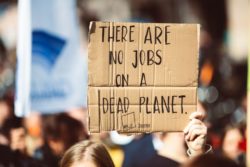
In the week of COP26, Courtney Stephenson explores the plans for green economic transformation in the West Midlands and considers how a new, green economy is an opportunity to place workers at the heart of the industrial revolution. Global Ambitions, Local Consequences This week the eyes of the world are on Glasgow, as the city … Continue reading “COP26 and the Green Economy; Opportunities and Challenges at the National and Regional Level”
Meet Jo Mills, WMREDI’s New Evaluation Analyst

I have recently joined WMREDI on secondment from the University of Wolverhampton as part of the ongoing collaborative partnership with regional universities, Local Authorities, Chambers of Commerce, and Local Enterprise Partnerships in order to help set up a new regional initiative: the Evaluation Lab. I have been tasked with the practicalities of ensuring supporting infrastructure … Continue reading “Meet Jo Mills, WMREDI’s New Evaluation Analyst”
Business Support: Referrals to Regional Universities by the GBSLEP Growth Hub

In this blog, Freya Williams, Alice Pugh and Juliane Schwarz examine the referral of businesses by the Greater Birmingham and Solihull Local Enterprise Partnership (GBSLEP) Growth Hub to universities in the West Midlands, including what sectors they come from, the size of businesses and what kind of support they receive. GBSLEP Growth Hub The Greater … Continue reading “Business Support: Referrals to Regional Universities by the GBSLEP Growth Hub”
E-Cargo Bikes – The Future of ‘Last-Mile’ Logistics?

Robert Lynam, one of City-REDI / WMREDI’s summer interns, writes about the use of e-cargo bikes for ‘last-mile’ logistics, potentially reducing emissions, congestion and delivery times in the West Midlands. What are your perceptions of an e-cargo bike? Peculiar-looking? A novelty that will eventually wear off? What about capable? As well as being favourable for … Continue reading “E-Cargo Bikes – The Future of ‘Last-Mile’ Logistics?”
Universities’ STEM Assets Project – An Intern’s Insight
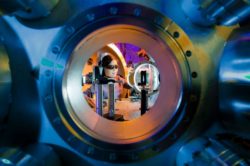
During his summer placement with WMREDI, Robert Lynam has been working with the rest of the Theme 3 Regional Innovation Ecosystems research team on the initial phase of a project which City-REDI/WMREDI are delivering on “Universities’ STEM Assets: Commercial and Non-Commercial Pathways and Aggregate Impacts“. In this blog, Robert tells us about his contribution to … Continue reading “Universities’ STEM Assets Project – An Intern’s Insight”
Good Jobs in the Midlands After COVID

Tony Dobbins and Anne Green outline some of the key points discussed at a recent event looking at good work in the Midlands. Speakers at a joint Work Inclusivity Research Centre (WIRC) and City-REDI webinar on June 24th 2021 debated research and policy ideas in support of good work in the English Midlands. Comparisons were … Continue reading “Good Jobs in the Midlands After COVID”
Serendipity Doesn’t Have to Be Left to Chance

In the final blog of a series exploring the power of anchor institution networks, Conrad Parke discovers that what sometimes looks like serendipity is really intent. This blog was first published on the CLES website. You can view the other blogs below: Anchor Network Supply Chain Hub: A Proposal Anchor Institution Networks: One Idea, Many … Continue reading “Serendipity Doesn’t Have to Be Left to Chance”
Levelling Up in the Knowledge Economy: Can the Ruhr Shake off its Rust?

Professor Matthias Kiese discusses the structural transformation of the Ruhr in Germany, a region attempting to leave behind its industrial past and move towards a knowledge-based economy. A broader analysis looking at the progress the Ruhr region has made towards levelling up over the last five decades can be found in the Industrial Strategy Council’s … Continue reading “Levelling Up in the Knowledge Economy: Can the Ruhr Shake off its Rust?”
Anchor Network Supply Chain Hub: A Proposal
The third blog in a series blog exploring the mechanisms for anchor institution networks to deliver on their aspiration to create and reinforce local economic ties. Read part one and part two. Conrad Parke details the thinking behind a proposal to create a supply chain hub to service the Birmingham Anchor Network. This idea is covered in … Continue reading “Anchor Network Supply Chain Hub: A Proposal”